
HERB’S CORNER | The Ten Commandments
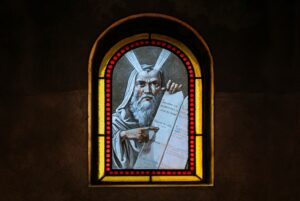 Photo by Bill Gullo on Unsplash
 Most people believe the Ten Commandments are among the finest guidelines for a virtuous life. Interestingly, hardly anyone can name them all. I wonder how many people have thought through the implications of how our pluralistic, democratic, and freedom-loving society would change if the Ten Commandments from Exodus 20 becomes law.
Let’s look at what could happen.
The First Commandment, “Thou shalt have no other gods before me,” conflicts with the First Amendment of the U.S. Constitution that guarantees freedom of religion—the right to worship one, several, or no gods.
The next three Commandments (make no graven images, do not take God’s name in vain, and keep the Sabbath day holy) refer to specific kinds of worship directed toward a God who punishes several generations of children because their fathers did not believe. These first four commandments are religious edicts that have nothing to do with ethical behavior. They describe how to worship and pay homage to a jealous and vindictive God. Those who claim that these commandments are our Judeo-Christian heritage don’t realize that they predate Christianity. Jesus, a Jew, would be considered a false god by his people, not one to be worshipped. And the Sabbath would be on Saturday, not Sunday.
The Fifth Commandment, about honoring parents, should not be so unconditional as to condone child abuse, an unfortunately common event. There is no commandment about parents honoring their children or treating them humanely. he next four (proscriptions against murder, adultery, stealing, and lying) have obvious merit, and existed in cultures long before these commandments were written.
The Tenth Commandment, “Thou shalt not covet thy neighbor’s house, wife, slaves, ox, donkey, or any other property,” condones slavery and treating women as property. (Furthermore, the American system of capitalism relies on coveting our neighbor’s possessions.)
The biblical penalty for violating many of the ten commandments is death.
These commandments are also notable for what they omit. Instead of condemning covetousness and threatening to punish children if their parents don’t worship in the correct way, why not condemn slavery, racism, sexual assault, child and spouse abuse, torture, and war? The Commandments in Exodus 20 are the most popular version, but an angry Moses smashed them according to Exodus 12:19 because Israelites were worshiping a golden calf.
Religions don’t promote the anachronistic replacements found in Exodus 34, which is the only place (Exodus 34:28) that the Hebrew Bible actually refers to the Ten Commandments. Its sage advice includes: Thou shalt not offer the blood of my sacrifice with leaven, the firstborn of a donkey shalt thou redeem with a lamb, and (my personal favorite), Thou shalt not boil a kid in its mother’s milk. However odd, I prefer these to the Tenth Commandment in Exodus 20, which promotes slavery and treating wives as property.
Some states have argued for the right to post the Ten Commandments on government buildings, promoting a particular religion. This is being contested in many states. Our founders created a secular constitution for “We the people,” the first three words of the Constitution, which mentions no gods. We are guaranteed the right to worship one, many, or no gods.
As a member of Charleston County Council in 1997, the now Senator Tim Scott (R-SC) insisted on posting the Ten Commandments on the wall of council chambers despite being told that he would lose any legal challenge to the action. In response, Scott argued that the display was needed to remind citizens of moral absolutes. Scott, normally a fiscal conservative, then added, “Whatever it costs in the pursuit of this goal (of displaying the Commandments) is worth it.” The court, as expected, declared the display unconstitutional and handed taxpayers a substantial bill for legal costs.
As a card-carrying member of the ACLU, I support the free speech rights of individuals to prominently display any commandments they choose on their private property, including bumper stickers, and T-shirts. But nobody may enlist the government to promulgate a particular religious view.
While controversies abound about posting religious commandments on public buildings, I propose a simple solution that both honors our democratic principles and reminds us of the curbs on governmental abuse of power: Let’s display our Bill of Rights on public buildings. We would still be posting ten (rights, not commandments), and we Americans can all support and celebrate these ten. Or can we?