
Harari Writes Like an Unreflective Theist An objection to Sapiens by Yuval Noah Harari
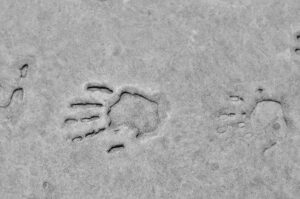 Photo by Fernando Reyes on Unsplash
Sapiens: A Brief History of Humankind by Yuval Noah Harari (Harper 2015) contains interesting new ideas, but many of those ideas are weakened by a pervasive conscious—or more likely, unconscious—theistic perspective. Harari seems unable to view the history of human thought or culture objectively from the perspective of a humanist or atheist. He does not reveal whether he is a recovering theist trying to become an atheist. If so, he clearly had not yet succeeded by the time he wrote Sapiens, first published in Hebrew on January 1, 2011.
The earliest pages of his book, in a chapter titled, “An Animal of No Significance,” include sentences like “The most important thing to know about prehistoric humans is that they were insignificant animals with no more impact on their environment than gorillas, fireflies or jellyfish” (p. 4). Throughout the chapter “The Law of Religion,” (pp. 209-236), Harari appears to adopt the neutral stance of an objective historian or anthropologist considering religion: Christianity and animism, Judaism and Islam, etc., are all presented and analyzed as interesting strains of human culture, all apparently equal to this neutral observer. A reader might well assume that the book is written by one weaned from theistic presumptions. But that is not the case. Consider the following passages.
- Harari thinks religions that, in principle, do not include belief in gods have something important in common.
Harari states (p. 223; emphasis mine):
Jainism and Buddhism in India, Daoism and Confucianism in China, and Stoicism, Cynicism and Epicureanism in the Mediterranean basin were characterized by their disregard of gods.
These creeds also disregard leprechauns, trolls, unicorns, and Santa Claus. Why does Harari consider their disregard of “gods” to be a salient characteristic? As anthropologist David Eller notes in Advancing Atheism, “Most religions that have been identified and studied by anthropologists . . . do not include gods . . . .” (p. 3). If one wants to divide all “religions” (using the term very broadly) into those that are theistic and those that are atheistic, yes, some religions are in principle atheistic. However, Harari’s assertion that all of them not including a feature that some other religions have does not make them like each other any more than saying that all religions other than one on the Island of Tanna in Vanuatu disregard the John Frum god and it is useful to lump them together and characterize them in this way.
Harari’s further assertion (p. 227) that it is relevant that most of the followers of these creeds that are in principle atheistic actually do believe in gods, as he asserts in the following passage, further shows his prejudiced presumptions favoring theistic religions:
. . . natural-law religions such as Buddhism never really rid themselves of the worship of gods. . . they continued to worship various gods, such as the Hindu gods in India, the Bon gods in Tibet, and the Shinto gods in Japan.
I agree with his assertion that most members of these religions have supernatural beliefs that include, or are parallel to, beliefs in gods, but this does not suggest that belief in gods is a superior or universal way for humans to think.
Harari even insists that, for example, liberalism makes “little sense” without a god-belief (p. 229), based apparently on his conclusion that something sacred or external to the natural world is inevitable for human beings. But that is demonstrably incorrect.
- Harari wrongly claims that most or all atheistic religions/ideologies are based on an assertion that there is a “natural law.”
On page 228, Harari states:
The modern age has witnessed the rise of a number of new natural-law religions, such as liberalism, Communism, capitalism, nationalism and Nazism. These creeds do not like to be called religions, and refer to themselves as ideologies. But this is just a semantic exercise. If a religion is a system of human norms and values that is founded on belief in a superhuman order, then Soviet Communism was no less a religion than Islam.
I agree it can be useful to define the word “religion” broadly enough to encompass any of these creeds, and I am happy to let any of these creeds call themselves “religions” if they want to. But why does Harari assert that, without reliance on gods, these religions must have placed faith in “natural laws” that form “a superhuman order”? Other philosophers merely observe that these creeds adopt certain values for various reasons or no reasons and do not assert that, in the absence of god beliefs, they must believe that values are determined by “natural laws.” Epistemologically, an assertion that there are “natural laws” that determine values is equivalent to an assertion that there are gods that determine values. Neither has a valid foundation in the scientific way of knowing. Harari wrongly asserts that every “religion” believes in something “superhuman/supernatural” and to me, this is the bias of a theist.
The better view is to accept that each of these creeds, and others, might base their value choices on merely human characteristics and thinking. They might be based on human nature, but human nature is not the result of a superhuman natural law. It is the accidental result of evolution.
If we revise Harari’s assertion with the strikeouts shown below, I agree with him.
The modern age has witnessed the rise of a number of new natural-law religions, such as liberalism, Communism, capitalism, nationalism and Nazism. These creeds do not like to be called religions, and refer to themselves as ideologies. But this is just a semantic exercise. If a religion is a system of human norms and values that is founded on belief in a superhuman order, then Soviet Communism was no less a religion than Islam.
- Harari mischaracterizes humanism as being based on false epistemology when he asserts that it relies on a belief that something is sacred.
About humanism, Harari writes (p. 230):
Humanism is a belief that Homo sapiens has a unique and sacred nature, which is fundamentally different from the nature of all other animals and of all other phenomena. . . . All humanists worship humanity . . . .
Harari goes on to present a table of the three different forms of humanism (p. 233), all of which, he asserts, subscribe to a belief that Homo sapiens has a “sacred nature.” This characterization is not accepted by most people who consider themselves to be humanists, including members of the American Humanist Association or of the Council for Secular Humanism and people who specifically call themselves “secular humanists” or “religious humanists.” These humanists do not say or act as if they believe there is anything sacred about humans. They simply assert that it is human nature to want to live well, and life is best for all of us humans when we adopt norms and values to treat people and our environments in ways that are best for us all and equal for individual humans. Humanists do declare that the good of humanity is of primary importance to humans, but not that this is founded on anything outside of human nature. Thus, the norms and values are adopted for pragmatic reasons, not based on something being “sacred” or humans having a different nature from all other animals.
An example might help clarify: should human slavery be condemned as immoral because every human is sacred? As slavery in the US was, after a protracted and bitter struggle with Quakers and other religious believers in the minority who opposed it, finally abolished and denounced as immoral, what would have been the humanist view? Could humanists only oppose slavery by considering individual human beings sacred? No—humanists would condemn (and have condemned) slavery as treating humans unequally and being demonstrably destructive of the happiness of many human beings, not just of those enslaved. Drawing only on human nature, it is evident that happiness of human beings has value. One need not invoke sacred or transcendent principles.
Philosopher Paul Kurtz made this quite clear in Forbidden Fruit where he noted, for example, that “We can see analogous forms of moral behavior in other species that bear striking resemblances to human conduct” (p. 68). Kurtz also noted in The Transcendental Temptation that “One is unable to be fully responsible for himself and others, to be creative, independent, resourceful, and free if he believes morality has its source outside man. The reflective, deliberative, probing moral conscience is too vital to be deferred to the transcendent” (p. 416).
Philosopher Corliss Lamont similarly disdained notions of sacred or supernatural humanity: “Humanism is the viewpoint that men have but one life to live . . . ; that human happiness is its own justification and requires no sanction or support from supernatural sources” (The Philosophy of Humanism, Sixth Ed. p. 14). It seems that Harari mistakenly takes the position he does because he sees the world through the eyes of a theist, believing that norms and values must necessarily come from something sacred or beyond human nature or beyond human pragmatism.
- Harari wrongly claims that humans have not yet invented a way to organize a stable society that does not rely on false beliefs in something outside human culture.
Harari states (p. 253):
All modern attempts to stabilize the sociopolitical order have had no choice but to rely on either of two unscientific methods:
Take a scientific theory, and, in opposition to common scientific practices, declare that it is a final and absolute truth. This was the method used by Nazis (who claimed that their racial policies were the corollaries of biological facts) and Communists (who claimed that Marx and Lenin had divined absolute economic truths that could never be refuted).
Leave science out of it and live in accordance with a non-scientific absolute truth. This has been the strategy of liberal humanism, which is built on a dogmatic belief in the unique worth and rights of human beings—a doctrine which has embarrassingly little in common with the scientific study of Homo sapiens.
I disagree. Humanism does not rely on false beliefs, or in fact on beliefs at all as “absolute truth,” unless it counts as a belief that knowledge and reality can never be certainly discovered. Humanism is not just another religion that bases morality on fixed external sacred or supernatural pretensions. It relies on practical knowledge developed by humanity over thousands of generations but asserts that this knowledge is still held as tentative. It relies merely on an assertion that humans can and should pragmatically, tentatively, decide what is best for humans.
In The Philosophy of Humanism, Sixth Ed., Corliss Lamont (p. 14) said that the failure, so far, to establish a successful humanistic society in the West can be traced to the corruption and confusion sewn by St. Augustine when he wrote, “Cursed is everyone who places his hope in man.” There is no evidence that a stable sociopolitical order cannot be based on humanistic pragmatism. And there is strong evidence that relying on a “religion,” however defined, has an inherent tendency to support conflict, often violent conflict, over the notion that something—Allah or the proletariat, Jesus or John Galt, The Holy Bible or John Frum—cannot be questioned or revised.
- Harari defines “religion” too narrowly by requiring belief in something supernatural.
Consider this quotation (p. 210), which shows the deep influence of theism on Harari’s thinking:
Religion can thus be defined as a system of human norms and values that is founded on a belief in a superhuman order. This involves two distinct criteria:
- Religions hold that there is a superhuman order, which is not the product of human whims or agreements . . . .
- Based on this superhuman order, religion establishes norms and values that it considers binding.
This definition excludes from the category of “religion” Confucianism, naturalized Buddhism, Unitarian Universalism, Quakerism, religious humanism, and other smaller groups that consider themselves “religious” but do not take their values from supernatural beliefs. Harari’s assertions that all these groups rely on superhuman beliefs such as natural law is wrong. Because some of these groups consider themselves to be “religious,” Harari’s definition of “religion” is too narrow. We should allow any organization that claims to be a religion call itself “religious” if it wants to. We should not tell them they must have supernatural beliefs to use that word. A suitable definition of “religions” could be, quoting with elision from Harari: “Religion can thus be defined as a system of human norms and values . . . ”
Harari’s probably unconscious theistic bias blinds him and potentially his readers to humanity’s full potential. The implication of his bias is that humans have no choice but to adopt a religion based on external, “sacred” forces when in fact a more rational, tentative approach (humanism) is more consistent with a scientific understanding of reality and provides an effective set of norms and values for guiding society.
References
Harari, Yuval Noah. 2015. Sapiens: A Brief History of Humankind. Harper.
Eller, David. 2007. Advancing Atheism. American Atheist Press.
Kurtz, Paul. 1988. Forbidden Fruit. Prometheus Books.
Kurtz, Paul. 1986/1991. The Transcendental Temptation. Prometheus Books.
Lamont, Corliss. 1982. The Philosophy of Humanism, Sixth Ed. Frederick Ungar Publishing Co.