
I Left Islam, but I Couldn’t Leave
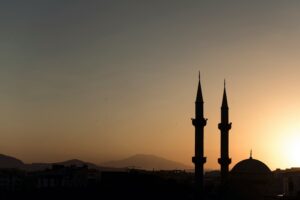 Photo by Ali Arif Soydaş on Unsplash
 Atheism. It is a simple word for many people around the world; it simply means not believing in any creator or deity. That’s it. You can be an atheist with minimal issues in Sweden, China or Japan, but have you tried being an atheist in Algeria, Egypt or Qatar? This is what I want to tell you about in this piece of writing. I want to tell you what it means to be an atheist in Algeria. I am not just repeating data that human rights organizations publish to show the complexity of the situation. Instead, I am telling you my own story: the horror I lived through every day as an atheist in a country where the state religion is Islam and the majority of the population is Muslim.
I was born into a Sunni family in one of the main cities of Algeria in 1995. I lived as a Muslim until 2014, when my entire belief system fell apart because it no longer made sense to me. You know when you have an epiphany out of the blue: Why am I here? Who is God? What is He made of? A lot of similar questions suddenly popped into my mind because I started thinking for myself, liberated from an educational system in the country that was based on belief rather than evidence-based science. Honestly, just telling myself that perhaps God was simply a trick and not real was scary enough for me at the time. Imagine having an entire religion that gives you answers to all your questions, even how to eat or how to use the bathroom, and then suddenly concluding that this whole religion no longer makes any sense to you.
Imagine the psychological weight of that realization, let alone the conditions that would subsequently be created for you as a new atheist in a society that has been conditioned to believe in one God and a particular prophet for hundreds of years. You might say, what’s the big deal? It is not just about no longer believing. In Algeria, simply declaring that to your friend or mother might cost you your life. Yes, you might literally be killed, but you might also be dead metaphorically: You could lose your friends, your family, your studies, your job, everything. On top of that, you might face legal consequences for expressing beliefs considered offensive to religion or destabilizing to society.
I was crazy enough to share my new beliefs with some of my friends, who completely stopped talking to me. Luckily, they never told anyone. For them, leaving Islam means saying that their prophet is not real, which is a big deal. For the government, there are also laws restricting certain forms of religious expression and blasphemy. After losing my friends, I decided to keep everything to myself to stay safe, to at least be able to continue my studies, and perhaps one day leave for a safer country.
I know it might look OK from the outside because you might think: What’s the big deal? It’s just beliefs. You can simply hide them and carry on with your life. But as a person living in such a society, I had to wear the Muslim headscarf for over 20 years, even when I no longer believed in it. If I decided to take it off, society would punish me emotionally so severely that I would live like an outcast. I had to fast during Ramadan against my will because, if I ate, I could be beaten by members of society or my family and I feared legal consequences as well. I had to pretend to pray to a deity I no longer believed in, and I had to praise religious figures who, from my perspective, had made my life a living hell.
When we talk about religious persecution, we usually think of Afghanistan or Iran. Maybe most people think of countries like Algeria as relatively safe places for non-Muslims, but it isn’t that simple. For me, as an atheist girl, living there meant living under conditions where I could not freely be myself. In both situations, I would be living a life that wasn’t my life, but a form of torture.
When I lived there, my biggest dreams were not about having a great career or a lot of money. My dream was much simpler: Maybe one day I could feel the breeze of air on my hair and arms. Maybe one day I could live the life I chose to live.