
The Enemy of Entropy & the Champion of Order
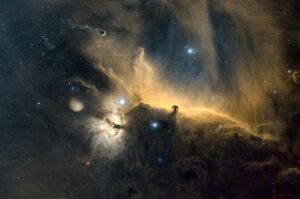 Photo by arnaud girault on Unsplash
 In 1852, the physicist and mathematician Lord Kelvin came up with the first scientific theory for the end of the universe. He envisioned a fate based on the Second Law of Thermodynamics, which states that thermal energy always flows from hot to cold.
The law is true on the human level of observation: Leave a hot object next to a cold one, and their temperatures will even out. But Kelvin considered its ramifications for the universe as a whole. His “Heat Death” was the inevitable result of the Second Law writ large: thermal energy evenly distributed throughout the entire cosmos. After years of a magnitude beyond the lifespan of even galaxies, history would reach an endpoint in which no one part of space has more energy than another, and heat transfer, along with movement, will cease — a net difference of thermal energy is necessary for it to flow, after all.
The scientific value of the scientist’s proposition is nebulous. The human value of his theory is supreme.
Kelvin drew on a phenomenon that he and his contemporaries were just beginning to understand: entropy. In physics, entropy is a synonym for disorder, describing the disorganized state that energy (including mass) is likely to enter as heat. Picture Henry David Thoreau tossing consecutive bricks on top of one another. It’s possible that they’ll land in a perfect wall, but astronomically unlikely.
Per Kelvin’s prediction, this disorder spreads along with thermal energy until all of the universe’s usable energy is thermal and distributed; once it’s increased, entropy can never decrease in a closed system. Movement is based on a net difference of energy and is rendered impossible when energy is fully distributed. A favorite example of the typical physics professor is gasoline, a molecule with great potential energy in its structure until a combustion reaction breaks down that structure into disparate, disordered atoms whose potential has become warmness. Isolated physical systems tend towards entropy as temperature spreads out and can never go in the other direction. The universe is one of these systems. Thoreau’s bricks will much more probably end up in an ungainly and unhelpful pile of chaos, and so will the building blocks of the universe.
Human beings are uniquely equipped to resist that chaos. We possess not only an ability but an insatiable urge to arrange objects into systems and categories that preserve their structure. Other life forms practice organization of their selves or their homes, like birds that preen and build nests, but we alone are wired to impose it on other things and people, as when Jay Gatsby asks Nick Carraway to have his unkempt lawn mowed.
Humans alone see in terms of tidiness, searching for patterns they can apply to bend the world to their will. Houses, properties, towns and city blocks are rectangular not because it makes them more efficient, but because it’s how we understand them. Straight lines will go, or consistent curves if they’re neat enough. Aesthetics converge on a plaid want for shapes that make sense.
Judged by their everyday decisions, not everyone seems to think in this way. Many people’s brains prefer nonlinear spaces, stories and artworks that lack a clear organizational pattern. But the universality of our innate affinity for order is codified in the largest human structures one contributes to: the languages we speak, the economies we drive, the countries we fight for.
Humanity is the enemy of entropy. The careful nature of the human is anathema to the chaotic nature of the universe. Nothing else stands in its way. We strive for order every day and do so automatically. Whether or not it’s a collective pursuit is what we get to decide.
This is a battle for the future, but we’re fighting it in the present. When humanity is losing its struggle with entropy, disorder reigns. The race descends into internal quarrels, and the triumph of chaos is physically realized in the bombs that scatter buildings and the clumsy bullets that pockmark art. We disagree about what structures should govern our lives. But in introspective moments, we agree that structure is a shared end. And we understand that we can only reach it by working together.
The other option is death on the individual and cosmic level. Explosions go off and children die and we waste our energy, our potential, on meaningless reactions that chip away at Earth’s inheritance until we are fighting over who should go on living rather than who should perish. Currently, our species is not engaged in assigning order to the universe, but in surviving long enough to have a say in the universe at all.
Physics gives us another universal rule, Newton’s Third Law, which lends itself much more memorably to mnemonics: Every action has an equal and opposite reaction. But few actions are likely to preserve organization. Perhaps the law explains the presence of humans and their orderliness in this universe, too, as a necessary opponent of disorder and collapse amidst a proliferation of entropy that threatens the destruction not just of structure but of action itself. The human may act as a champion of order so as to sustain a great balance, even if we are constantly trying to tip it. No one else can or will stop the coming death. Science invites human hegemony.
This is not an easy fight, and it has no clear end. What the structures we create should look like will forever be a question without a single answer. Our work is interminable. As the representatives of energy’s potential, life, we stand on the precipice of a universal competition for organization against an eternal force of chaos. Can we organize ourselves?