
FIRST PERSON | Finding Ground in the High Mountains
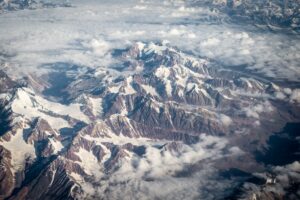
From the window of my classroom in the Pir Panjal range, the view is often distracting. Depending on the month, the slopes outside are either blanketed in a blinding, pristine white or bursting with the chaotic green of the monsoon. Visitors who trek through this part of Jammu and Kashmir often pause to catch their breath, look up at the serrated ridgelines cutting the sky and exhale some variation of the same sentiment: “God is surely here.”
It is a natural reaction. The scale of the Himalayas is so crushing to the human ego that it feels intuitive to reach for the supernatural to explain it. The sheer verticality of the landscape suggests a cathedral; the silence of the cedar forests suggests prayer. But living here, teaching here and navigating these paths every day has cured me of the need for mysticism. Ironically, dwelling in one of the most “spiritual” landscapes on Earth has cemented my commitment to naturalism.
When you live at this altitude, the mountains stop being symbols of the divine and start being exactly what they are: geology, biology and physics.
Last November, during the transition into our harsh winter, I was walking home along a narrow track carved into the hillside. The sun had dipped behind the western ridge, and the temperature was plummeting. The air here gets thin and sharp; it doesn’t caress you, it confronts you. On that walk, I passed a section of the road where a minor landslide had occurred the week before. A slurry of mud, shale and uprooted pine saplings had spilled across the path.
I stopped to look at the debris. A tourist might have seen the violence of nature or a bad omen. A fatalist might have seen the inevitability of destiny. I saw gravity. I saw the saturation point of soil mixed with melted snow. I saw the precarious friction of tectonic plates pushing India into Asia.
There was no malice in the landslide, just as there was no mercy in the stunning sunset painting the clouds purple above it. The mountain was indifferent. To some, this indifference is terrifying; it is the cold silence of a godless universe. But standing there, shivering slightly in the biting wind, I found it profoundly comforting.
If the mountain is indifferent, it means we are not being punished when the earth shakes, nor are we being rewarded when the harvest is good. We are simply inhabitants of a physical system. This realization brings a heavy responsibility, one that sits at the core of my humanist worldview: If the mountain does not care about us, we must care about each other.
In these isolated valleys, survival is a communal act. When the snows close the high passes, the prayers offered at the local shrines provide emotional solace to many, but it is the shovel in the neighbor’s hand that clears the path. It is the stockpiled rice and the dried vegetables shared between families that ensure we make it to spring. The “miracle” of survival here isn’t divine intervention; it is human cooperation.
As a teacher, I try to impart this grounded perspective to my students. When we study the water cycle, we don’t strip the poetry from the rain; we add the beauty of comprehension. Knowing that the water running through our streams is the result of evaporation, condensation and ancient glacial melt doesn’t make it less sacred to life. It makes it real. It connects us to the ecosystem not as subjects of a creator, but as participants in a biological process.
There is a specific kind of quiet that settles over the Pir Panjal in the dead of winter. It is a silence so total you can hear the blood rushing in your own ears. In that silence, I do not find spirits. I find clarity. I find a deep, resonant appreciation for the chance occurrence of consciousness.
Nature, in its rawest form, is not a temple. It is a laboratory and a home. It is messy, dangerous, beautiful and governed by laws that are discoverable and consistent. Acknowledging this doesn’t diminish the wonder of looking at a snow-capped peak. Instead, it shifts the wonder from the supernatural to the natural. It is enough that the mountain exists. It is enough that the tectonic forces raised it, that the glaciers carved it, and that I am here, against the odds, to witness it.
Walking the rest of the way home that evening, I navigated the mud carefully. I didn’t trust in a guardian angel to keep my footing; I trusted the friction of my boots and the balance of my own body. I felt incredibly small against the darkening silhouette of the range, but I did not feel lost. I felt grounded, rooted in the dirt, breathing the cold air, fully alive in the only world we have.