
On Being a Wave
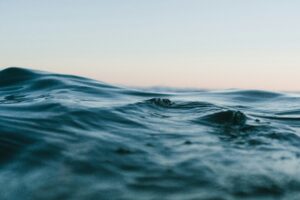 Photo by Matt Hardy on Unsplash
As I get older, I can see from the vantage point of time that my youthful dalliances brought me closer to who I am today. Case in point, in the early 1980s I went to a club in Manhattan and drank to excess. I was there with my best friend, Adam, and on the subway ride home at about 4:00 a.m., I told him with bravado that, “I am water, all of us are water.” I repeated this like a mantra for several minutes.
Why? Maybe because I had recently seen the movie Altered States, a trippy film about a professor who ingests magic mushrooms, hops into a sensory deprivation tank, and devolves into a proto-human. Or perhaps I was having an engaged connection to the cosmos because of my temporary altered brain chemistry. Or just maybe, I had at that moment taken an ontological leap into the nature of existence that is perhaps the cornerstone of both natural science and philosophy. Perhaps it was elements of all three?
As perhaps a wiser and certainly much finer aged humanist and a scientist, I know nothing lasts forever, not any particular civilization, person nor oneself. Everything simply follows a natural system, whether it be the body, society, or language. We come into this world, we alter it in big and little ways within the term limit of our existence, and then we eventually leave. Wax on. Wax off.
This scares many because the end is often unfathomable and can leave us with feelings of abandonment. We may worry, “How will the world get along without me?” or “How will my children survive” or “What will become of so-and-so system, society, or person without me.” I conclude that such worry stems from the combined sense of fear of the unknown and the loss of one’s ego. However, we must remember that the Earth has been spinning for 4.5 billion years, and will keep on spinning without any of us after we’re gone no matter contributions or concerns we might have as individuals before or after we cut the mortal coil. None of it because of a Devine source, but in spite of it. The universe owes us nothing and it is in the present where we can best allay our fears and assuage our egos.
This brings me back to my rant from forty-six years ago about being water. The Buddha noted that our lives are like waves, each very different. Some are tall, others short, some with high crests, some small. But no matter the size and impact of the wave, it always returns to the larger body of water in which it was formed. Just as we all come into this world through a preponderance of intent and accidents. We spend our 80 years, more or less, in service to ourselves and others and then we pass back to the cosmos from which we came.
Of course, waves do not have our stubborn human consciousness, which means they may not be aware of the role they play in the complex system of Earth’s ecology. Consciousness then is perhaps both a blessing and a curse. Humans are aware that everything is ever–changing and fleeting. Perhaps this is why, at least in part, people are drawn to religion and the idea of some lasting eternal existence in some artificial paradise. As a non-believer and humanist, I have never seriously entertained this possibility. As someone who has also faced the possibility of death on at least four occasions, I have never prayed or asked for redemption. Not once.
This is mainly because I know that my physical existence, whenever it comes to an end, will have been enough. No regrets. No begging for more time. I will be just another wave crashing back into the ocean of its birth. What will become of me will be carried in the genes of my children and their children and so on. And, of course, my existence will be in the memories of those who carry me ethereally into the future. This is why I publish books, as well, Maybe in generations to come, someone will pick up one of my tomes and I will speak to them, digitally or in print, as you are reading my words now?
Two very entertaining illustrations of the wave—both the humanist and Buddhist perspectives— serve us better than any holy book. The first is Albert Brooks’s film Defending Your Life, and the second is the television show The Good Place.
In the film, Brooks dies, goes to Judgment City and has to defend how he overcame his fears before being able to move forward into the universe. Perhaps the best line of the film hits my gut every time, “…When you use more that 3-5% of your brain, you don’t want to be on Earth.” Considering the judgment has nothing to do with the Abrahamic scare tactics of the bible, and Brooks’ character’s love interest in Meryl Streep, it’s a fun film worth watching.
In The Good Place, four strangers die and are tricked by a demon (played by Ted Danson) into thinking they’re in the Good Place, even though they are really in the Bad Place. Their four- season saga of friendship and their final goal, repair how people are judged, is deeply amusing and heartwarming. If you enjoy philosophy, both Western and Eastern, then this program will have you sitting up straight as they opine of the concepts of goodness, human motivation, friendship and the choices we make.
There is also one very good tale told about the singer and film star Frank Sinatra. He was asked why he impulsively gave away a pair of $5,000 cuff links to a woman whose husband was home ill in bed, and was a lifelong fan. He said, “All of us are renting. One day someone will be driving my favorite car, someone will be living in my house. Nothing I have is permanent and I can’t use any of it after I die.” The idea that everything is temporary as insightfully explained by Ol’ Blue Eyes shows that you don’t need a degree in theology or PhD in philosophy to understand how truly interconnected we are as a species.
Perhaps the final example I can leave you with is to read the beautiful children’s book The Fall of Freddie the Leaf. The book deals with all the stages of our individual and collective lives. And how we might value existence, purpose, love, and death while we’re alive to actually encounter them. It’s a truly great book and one that may start a conversation with a child through what will become their humanistic destiny.
Regardless of how you accept both the concept and reality of our mortality, it’s important to come to terms with our eventual end. We can certainly be angry and curse the dying candle of our lives. Or we can come to terms and embrace the burnt end of the wick as it silently fades to black. In either case, the choice is in your hands and in your perspective.
Personally, I am satisfied to return to the ocean of the cosmos. My mantra today remains what it was decades ago, “I am water, all of us are water.”