
The Banned Books Our Staff Love and Recommend
 Photo by Alfons Morales on Unsplash
 It’s Banned Books Week, that mischievous time of year when we celebrate the written works that have dared to offend, enlighten or simply ask too many excellent, awkward questions. To willingly seek out these prohibited texts isn’t just an act of literary appreciation – it’s a vital, deeply human assertion of intellectual freedom and the right to wrestle with complex, even controversial, ideas.
So, what literary sparks have ignited the minds of those fighting the good fight here at the American Humanist Association? Our staff dove headfirst into the fray to share the banned books that have most profoundly shaped their thinking. Get your reading lists ready:
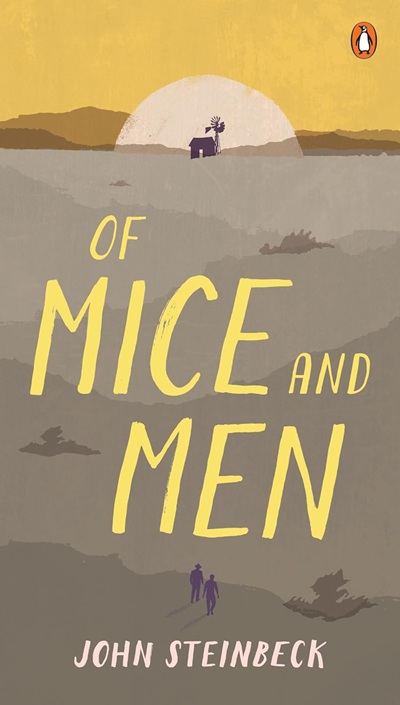 “Of Mice and Men” has stayed with me because of how raw it is about mercy, regret, and responsibility. Candy’s despair at not shooting his dog himself, that mix of betrayal and love toward a being that could not advocate for itself, made me think about what it means to take ownership of an impossible choice. That same tension runs through George and Lennie’s relationship, which is why I always sympathized with Lennie most. George carried the weight of caring for him in a world already stacked against them, and Lennie’s good intentions were constantly misunderstood. What the book taught me is how deeply human it is to want to protect those who cannot speak for themselves, and how often mercy and justice come tangled together with pain. It has been banned for its language and violence, but that misses the point. The story is visceral, unforgettable, and forces you to ask what you would do if it were you. That is why it matters.
— Shay
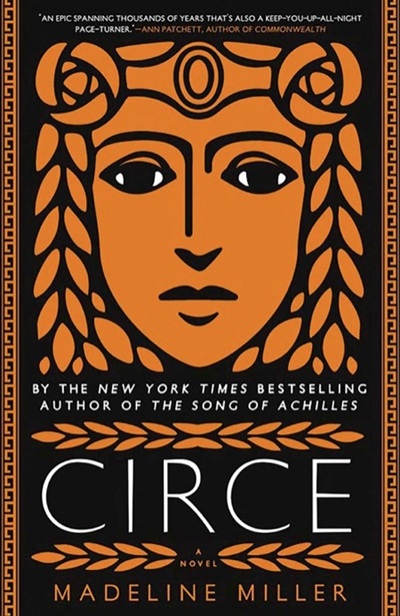 I’ve long been a fan of novelist Madeline Miller, and was flabbergasted to learn that one of her best works, “Circe,” was banned in a Tennessee school district last year. Miller reimagines the stories of background characters in classic Greek myths and fleshes out their lives, exploring themes of marginalization and otherness in the process. In Circe, she masterfully constructs a tragic and thrilling life of the infamous witch in Homer’s “Odyssey,” redeeming the character from the cartoonish villain that’s been portrayed over the centuries. “Circe” is not just an important reexamination of a classic character, it’s also a beautifully written work. It deserves to be on school library shelves everywhere.
— Peter
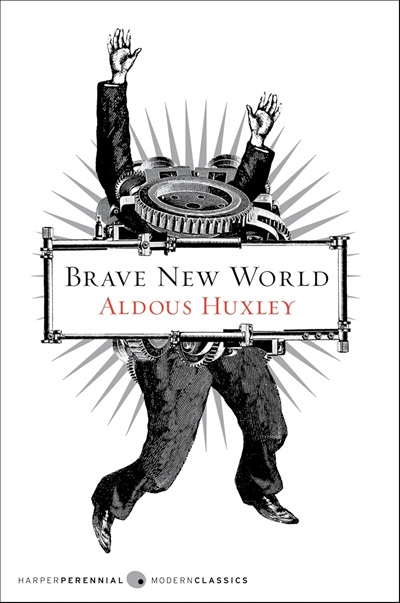 It’s easy to look for dystopia in military helicopters or surveillance cameras, but what if the real threat is the comforting glow of the screen in your own hand? Ever since I first read Aldous Huxley’s “Brave New World,” it’s maintained a place on my top shelf of fiction that has challenged me to think. Huxley’s terrifying vision was that you don’t need force when humanity can be so easily seduced by pleasure. He envisioned a world pacified not by fear, but by a steady drip of mindless entertainment and feel-good drugs. The citizens of his London, 632 years “After Ford,” were too blissfully distracted to bother with anything as difficult as freedom.
Today, with our own infinite-scroll culture, it feels damn near prophetic. Written in 1932, in the shadow of one world war, a global depression, and the rise of fascism in Europe, Huxley responded by writing a beautiful defense of human dignity, reason, and self-determination. Unknown to my younger self, these were the same values championed by his brother, Sir Julian Huxley, a foundational figure in the modern humanist movement. Looking around today, I think it’s pretty clear that we need its message more than ever. Brave New World challenges us to remember that the most effective prison is the one we don’t realize we’re in, the one that is currently blinding us through one easy dopamine hit at a time.
— Jake
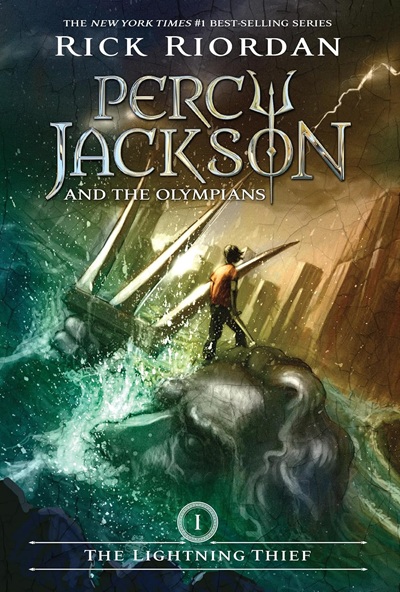 As a kid, I absolutely loved the “Percy Jackson” series by Rick Riordan. It’s a fun middle grade adventure series following a tween boy who’s this dorky, bullied kid with ADHD and dyslexia. He finds out that he’s the son of an ancient Greek god and that he has all these superpowers, and goes on a bunch of exciting adventures with his new friends. I was shocked to learn that in 2025, this series has been banned in some US school districts, perhaps because of its themes of challenging authority, the sheer existence of LGBTQ+ characters, or maybe even because a story based on Greek mythology is perceived as blasphemous in some way?
I don’t want to say that banning Percy Jackson is ‘too far’ because that implies that there are books that are acceptable to ban, and that’s not the case. Literary freedom is absolutely essential; if even one book becomes banned, every title becomes fair game for one reason or another, extending far beyond what most folks see as ‘controversial’ material. We talk so much about protecting children, but from what: joy? imagination? the idea that being yourself might actually be okay? Kids aren’t just missing out on lessons when these books disappear, they’re missing out on fun. Why are we going after fun?
— Claire
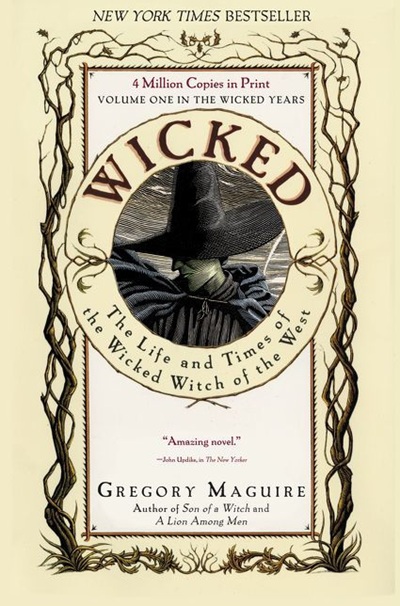 I read “Wicked” around the time I saw the original cast on Broadway and I’ve been thinking of re-reading it, and its sequel (“Son of a Witch”), since hearing the first movie was in development. Gregory Maguire creates such an imaginative and detailed world to get lost in, yet it also highlights many societal challenges we all experience. I understand parents’ concerns over the sexual content and political messaging, but it’s not a kids book. It would be a great book for high schoolers because there’s so much to discuss and lots of parallels to make between fantasy and reality, history and art.
— Emily
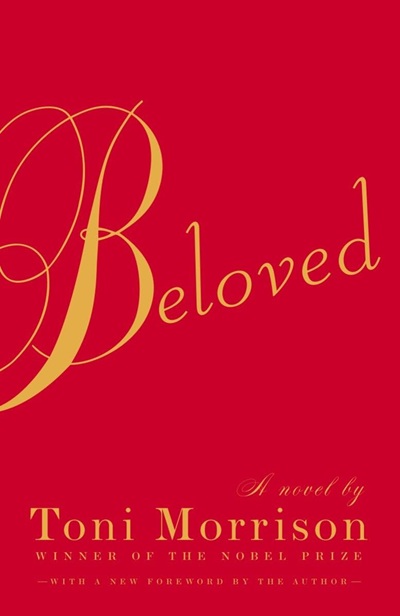 I was assigned to read “Beloved” by Toni Morrison no less than five times during my career as a public school/university student, and it’s no secret why: as a piece of literature, it stands in a class of its own.
Beloved has been banned across the country, most commonly for the graphic depictions of the routine, institutionalized sexual violence experienced by enslaved Americans. Beloved is not an easy read, but that would be true of any novel that attempted to honestly portray slavery in America. Opponents to Beloved’s inclusion in curriculum are – I’d argue – much more scandalized by the implication of young people reading these graphic details than they are by the fact of the violence itself.
The novel’s dedication reads: “Sixty Million and more,” a reference to the number of individuals estimated killed by U.S. slavery and the Trans-Atlantic slave trade When accepting an award for Beloved in 1988, Morrison noted that “there is no suitable memorial or plaque or wreath or wall or park or skyscraper lobby” honoring the memory of enslaved Americans. “And because such a place doesn’t exist (that I know of), the book had to,” she continued. It is precisely this act of remembering history that opponents of this book are so terrified by.
— Court
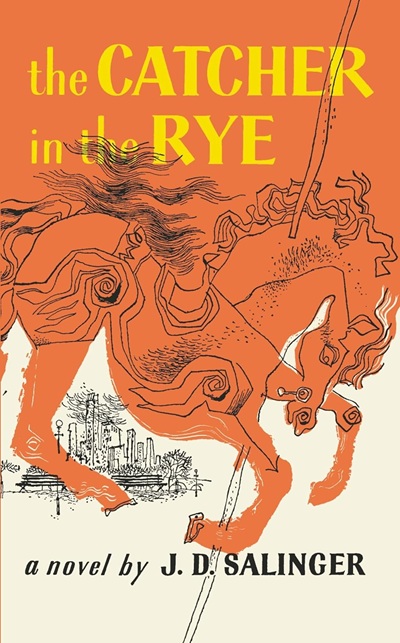 Maybe it’s because this book caught me exactly when and where I needed it – at a tough time in my teenage years when I related a lot to Holden Caulfield – but I’ve never understood the people who wanted to ban “The Catcher in the Rye” for blasphemy or the ones who simply call it irrelevant.
To me, it captures the pain, uncertainty and exhilaration that many of us feel when lingering on the cliff-face between childhood and adulthood. And the fact that Holden is sometimes muddled, whiny or self-centered in the way he expresses it is exactly what makes it such a good articulation. Most teenagers aren’t perfectly self-sacrificing and heroically mature like Harry Potter – they contain multitudes. Bratty, myopic multitudes.
But people don’t like complicated and imperfect characters, they’re prudes about swearing and sex, and they definitely don’t like teenagers and their inconvenient questions and their awkward and conflicted manner of veering back and forth over the line between child and adult. So Catcher is banned or panned. It’s a shame – because I think it speaks to the deeply humanist pursuits of trying to make sense of a cruel world mostly on your own, reaching out for connection when you feel alone, and doing your best to protect the vulnerable, pursue authenticity and chase independence. And it does so in a way that’s authentic to the messiness of growing up.
— Fish