
To Catch a Cult Predator: Black Women Beware
In the beginning of the grooming process, there is sweetness and light. The groomer wants you, acts like you’re the only one in the room, showers you with adulation, folds you into the embrace of a gushingly warm 24/7 community and immerses you in the seductive quicksand of their budding nation/family/tribe, anchored by the benevolence of a shiny new “god” who becomes mother, father, lover, sister, brother, confessor, judge, jury and executioner all rolled up into one.
The cult honeymoon phase is like the waystation before the Sunken Place. Lulling and dreamy as a Lorelei song.
Lately, it’s been nearly impossible to watch any streaming platform without stumbling onto a new saga about a heretofore obscure cult. One of the most recent exposés spotlights the downward spiral of the Black-led “Carbon Nation” group, which joins a long line of religious regimes powered by misogynoir (or anti-Black misogyny) and toxic masculinity.
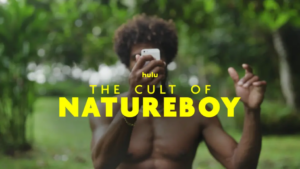
As chronicled in a new Hulu series called “The Cult of Natureboy,” Carbon Nation was an Afrocentric back-to-the-land group founded in 2016 by a YouTube influencer and predator named Eligio Bishop in response to increasing police violence against Black people. Fleeing white supremacist tyranny in the U.S., the group spent eight years traveling through various foreign countries until its demise in 2024, after Bishop was convicted and sentenced to life in prison for rape and false imprisonment. Bishop and his enablers got off on demeaning, dehumanizing, brutalizing and sexually abusing his Black female followers, branding them as bitches, hos and property that he could control and dispose of at will. Instituting a culture of militaristic obedience, Bishop’s abuse was steeped in the rhetoric of Black patriarchy, shallow Black nationalism and pathological narcissism. Any Black woman who challenged his rule undermined the dominance of Black men, reinforcing Black women’s “treasonous” attachment to white patriarchy.
Bishop obsessively documented this abuse on YouTube and social media, wracking up hundreds of thousands of views and followers. So, why did no one report it? As one of his victims noted, “He said that nobody cares about Black girls like us.” In that regard, he correctly banked on the devaluation of Black women’s lives to fuel his regime of extortion and torture. As the cult matured, Bishop started trotting out the language of godly omnipotence, demanding that his followers refer to him as God.
Bishop and his cult terrorism were eventually exposed by two Black women internet “detectives” and an ex-follower named Jenae who took the courageous first step of pressing charges and testifying against him in court. Reflecting on Bishop’s tactics in the documentary, one of his ex-followers mused that they were like “Cult (indoctrination) 101.” That may be so, but Carbon Nation’s caricature of cultishness begs the question as to why people from all walks of life are still powerfully attracted to and seduced by cults. It forces us to ask what makes otherwise moral people cross the line to aid and abet cult violence and coercion? And how are Black women, by virtue of having some of the highest rates of gender-based violence victimization globally, uniquely vulnerable?
At one point in the documentary, the filmmakers briefly allude to the horrors of Peoples Temple and Jonestown, the predominantly Black San Francisco Bay Area-based church movement that ended in mass murder and suicide in 1978. The massacre of over 900 mostly Black women, men and children in Jonestown, Guyana has been deemed an outlier phenomenon so horrific that it defies comprehension, having spawned scores of books, articles, TV shows, documentaries and other treatments. There is undoubtedly a clear throughline between Peoples Temple and Carbon Nation. Both relied upon the abuse and exploitation of Black people in general and Black women in particular. Both were run by sexually predatory demagogues who manipulated their followers into believing that their communities were utopic bulwarks against anti-Black racism. And both capitalized on the trauma and turbulence of the era’s sociopolitical climate to weaponize their followers’ dreams of community, collectivism and Black affirmation.
Hence, it’s noteworthy that Peoples Temple and Carbon Nation took Black women’s labor as their raw material and primary source of capital. Peoples Temple was headed by the white sociopath Jim Jones, who utilized his twisted Black Power minstrelsy to reel in and dupe multigenerational Black women disillusioned with California’s Great Migration-era promise of equal opportunity and release from Jim Crow terrorism. As Black Jonestown survivor and activist Leslie Wagner Wilson stressed in my 2016 interview with her, “We were the backs upon which Peoples Temple existed and grew from. We were the majority of what made up Peoples Temple and of course, Jonestown. We were no different than our ancestors who actually built the United States from free labor called chattel slavery.” Wilson escaped from Jonestown before the massacre with a group of young African American men and women. She lost multiple family members in the massacre and is the author of the memoir “Slavery of Faith”, as well as the producer of the new Black Jonestown podcast.
In many respects, the young women who became ensnared in Carbon Nation are the spiritual descendants of all the Peoples Temple Black women who gave up their livelihoods to invest in what they believed would be an antidote to the racial disparities they were experiencing in the U.S. As one of the most faith-based groups in the nation, Black women have historically relied upon and utilized organized religion for community, self, identity and cultural capital, but at what cost?
There is a fine line between cult tactics and hierarchies and that of organized religion. What do they have in common? At core, the grooming and lovebombing of followers. Regardless of the cult or religion’s ethos and philosophy, it establishes itself as the ultimate arbiter of reality, morality, ethics, justice and lived experience. Followers are convinced that their lives would be nothing without the cult or faith community, while the cult supplants their families, professional lives and previous community ties. Outsiders are viewed with suspicion and hostility. Skeptics are demonized. Women and girls are demeaned, manipulated, victim-shamed and blamed into believing that they are impure and worthless, which leads them to being sexually exploited and abused by the cult leader and their followers. Queer folks and “lesser” men are also castigated and stigmatized. The cult leader develops a culture of violence, domination and control that relies upon the complicity and enforcement of the organization’s members. Finally, the leader declares themself to be “God”, manipulates followers into believing that dissent defies God and thereby jeopardizes their salvation in heaven and/or the receipt of some eternal reward. This vicious cycle of indoctrination and exploitation is anchored by financial extortion whereby followers are required to “donate” a significant portion of their income, savings and property to support the cult or faith communities’ livelihood.
Cult indoctrination of religious followers is also similar to that of human trafficking victims. Trafficking victims have their individualism and sense of humanity systematically eroded by the predator who exercises unquestioned power, authority and control over the victim’s livelihood, body and identity. In essence, the cult becomes the family and the extended family becomes the cult, seemingly providing for all of the victim’s material, social, emotional and psychological needs.
Given that Black women and girls are especially vulnerable to religious/cult indoctrination and trafficking (representing 40% of trafficking victims in the U.S.), providing them with holistic tools for self-advocacy and self-determination is critical. Some of these protective strategies include being attuned to the warning signs of grooming and exploitation, staying in contact with trusted friends and community, engaging in humanistic mental health and wellness activities that don’t rely upon the dominance of a focal leader, developing money management skills that prioritize one’s own livelihood, and setting boundaries for charitable giving and personal space.
In her 2022 memoir “The Community,” N. Jamiyla Chisholm writes about her experience in Ansaaru Allah, a Black-led separatist cult that also preached and preyed upon Black folks’ quest for utopia and self-determination. Ansaaru Allah’s former leader was sentenced to 135 years in prison for child molestation. In her book, Chisholm notes that, “No is one of my favorite words. No is a boundary setter, it helps me create space for myself, it helps me stand up for myself, it puts people on notice that not everything is up for consideration. If my mom had told my father or any of those people in the Community ‘no’ early on, we wouldn’t have lasted more than a week in that place, because they would’ve kicked us out. The Community was a place of yes. That’s how you survived. That’s how others were able to accumulate power — people just kept saying yes. I’ve learned that sometimes you need to say no and walk away for your own faith keeping.”
Feeling empowered to say no can be a tall order for Black women who are conditioned to sacrifice body, soul and self to be caregivers for Black men, children, white folks and the whole damn world. Yet, our ability to thrive rather than just survive may depend on whether we can dismantle a society that normalizes cult predators and build one that allows Black women to truly say “yes” to themselves.