
The Underworld of Grief What “Hamnet” Reveals about Love, Loss and the Stories that Bring Us Back
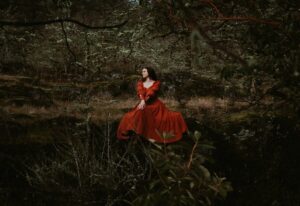
Stories about the underworld are rarely really about the dead. They are about the living—about how human beings survive grief. From the ancient myth of Orpheus and Eurydice to the imagined life of William Shakespeare and his son Hamnet Shakespeare, the same question returns: How do we continue loving after loss?
We often imagine great writers as monuments cast in bronze, untouchable and distant. Shakespeare—the most famous playwright in the English language—is often treated this way: a towering intellect whose words echo across centuries.
But the life behind the work was startlingly human.
At eighteen, Shakespeare married Anne (sometimes noted as Agnes) Hathaway, who was 26 and already pregnant. Their first child Susanna arrived just six months after the wedding in 1583—an event that likely stirred gossip in their small Warwickshire community. Soon after came twins: a son and a daughter, Hamnet and Judith.
The young couple began their lives not as legends but as ordinary people negotiating the messy, unpredictable realities of love, family and survival.
History has a way of smoothing the edges of lives like these. But the truth is far more vivid.
In Shakespeare’s time, the theater was not the hushed cathedral we often encounter today. Audiences shouted, laughed, argued and sometimes threw peanuts if they didn’t like what they saw. The theater was rowdy, communal and alive. Shakespeare himself was known not primarily as a playwright but as an actor—one among many players working to entertain a restless crowd.
Even the circumstances that allowed him to write were shaped by crisis. When outbreaks of the Black Death forced the closure of theaters across England, actors suddenly found themselves without stages. In that forced stillness, Shakespeare turned to poetry. It was during these closures that he produced many of his sonnets, publishing them in his late twenties—an act of artistic adaptation producing the sonnets that would later become some of the most celebrated in the English language. All born in a moment of plague and uncertainty.
It is strange to realize that the literary monuments we now revere were written in moments when the world itself seemed to be collapsing.
But the deepest tragedy of Shakespeare’s life arrived not in the theater or in public life, but at home.
In 1596, his son Hamnet died at the age of 11.
The death of a child is a wound that language itself struggles to hold. Yet scholars have long wondered how this loss echoed through Shakespeare’s later work—especially in the haunting play Hamlet, written only a few years later (Greenblatt, 2004). The names alone—Hamnet and Hamlet, used interchangeably in his era—seem to be too much of a coincidence to discount.
Grief has always lived at the heart of Shakespeare’s writing. His plays, literally tragedies, return again and again to loss, betrayal, longing and the fragile persistence of love. Beneath the royal courts and political intrigues lies something deeply human: the attempt to understand grief. But in recent years, a new way of imagining this story has emerged—not through Shakespeare himself, but through the life of his wife.
The novel “Hamnet,” written so beautifully by Maggie O’Farrell in 2020, reimagines the Shakespeare family through the eyes of Agnes, a woman rooted in instinct, intuition and the deep rhythms of the natural world. In this telling, the famous playwright recedes into the background while Agnes steps forward from the historical footnote and becomes the emotional center of the story.
Agnes is portrayed as elemental—deeply attuned to nature, instinct and the unseen rhythms of life. When her son dies, her grief is not restrained or socially manageable. It is primal. She enters what feels like a living underworld, a state where the ordinary world continues but she herself can barely participate in it.
It is here that the story quietly transforms into myth.
It is from Shakespeare himself that we are first introduced in the movie to the concept of the underworld, as he acquiesces to Agnes’ request to tell her a moving story. In ancient Greek mythology, Orpheus descends into the underworld to retrieve his beloved Eurydice. He is granted permission to lead her back to the living world—but only if he does not turn around to look at her. Unable to resist, he looks back, and she vanishes forever.
The tragedy lies in that backward glance.
That futility of loss that ruins everything forever.
But the story of Agnes and Shakespeare imagines another possibility.
Agnes, branded by her community as a kind of forest witch, carries within her the ancient suspicion that has long surrounded women who live too close to instinct, intuition and the natural world. She moves through the story as if tethered to something older than the village that mistrusts her—an inheritance of ancestral knowing, but also of ancestral grief and rage. In her sorrow we glimpse not only the loss of a single child but the accumulated weight of generations of women who have endured love, loss and the quiet marginalization of their wisdom.
From the very beginning, Agnes challenges the inevitability of myth. On her wedding day, she asks Shakespeare to turn and look at her—a simple gesture charged with defiance. When he does, it is as if they have momentarily overturned the fatal logic of the Orpheus and Eurydice story: Their love will not be undone by loss, their fate stronger than the curse that claimed Eurydice. Later, as “Hamlet” plays on stage, Agnes gazes at Shakespeare’s back, silently imploring him to turn once more, to prove again that their destiny is not bound by the ancient tale. In these moments, the classical underworld is not a sentence to despair but a space that can be confronted and transformed—where love and grief coexist, and human choice bends the trajectory of fate.
Instead of condemning his grieving beloved to the underworld, the artist turns toward her. Through the creation of “Hamlet”—through the act of storytelling itself—he offers a way back. Grief is no longer a final exile but something that can be reshaped through art. The play becomes a living expression of loss and, at the same time, a bridge between the worlds of the living and the dead.
In this telling, the underworld does not lie beneath the earth but within the natural world of the forest itself. The woods become a liminal realm where birth and death coexist and the boundary between worlds grows thin. Agnes has always belonged to this landscape. Hamnet was born beside the forest’s dark void, and at the story’s end he reappears through an opening in the stage that mirrors it. The realm of myth quietly dissolves into the living world—one Agnes has always known how to move through.
For a moment, he turns and looks at her. Unlike the myth of Orpheus and Eurydice, this turning does not erase him or banish her deeper into sorrow. Instead, something shifts inside her. Joy flashes across her face—not because the loss disappears, but because memory itself has become a doorway back into life. She realizes that imagining her son returning to the sacred woods, even in death, does not destroy her. Unlike Eurydice, whose fate ends in permanent separation, Agnes discovers that grief and love can exist together. Her heart, though marked by sorrow, is not bound by the fatalism of myth; her connection to her son and to the landscape of their shared life becomes a source of strength rather than annihilation.
Art, in this vision, becomes a form of resurrection.
This is the quiet miracle of human love. Grief does not end. The dead do not return. And yet something extraordinary happens when memory, imagination and love intertwine: the lost become part of the living world again.
What is remarkable is that this emotional truth did not remain confined to the page.
When actor Jessie Buckley took on the role of Agnes in the film adaptation, she described the experience not simply as performing a character but as encountering something deeply human and ancient. The power of Buckley’s portrayal has not gone unnoticed. For her performance as Agnes in “Hamnet,” Jessie Buckley has swept the major awards of the season, winning the Golden Globe Award for Best Actress in a Motion Picture – Drama, the Critics’ Choice Movie Award for Best Actress, the BAFTA Award for Best Actress in a Leading Role, and the Screen Actors Guild Award for Outstanding Performance by a Female Actor in a Leading Role. This remarkable sweep culminated in her win for the Academy Award for Best Actress.
The recognition reflects what many viewers have felt instinctively: that Buckley’s portrayal of grief, motherhood and resilience is not merely impressive acting but something profoundly human.
“What it is to be a mother, to be a family, to love at all is so brave,” she reflected. “Because anytime you choose to love, you’re also choosing to lose” (Huston, 2025).
Within that simple observation lies the central philosophy of the story. Love is not safe. To love someone—to build a family, to open one’s heart—is to accept the very real risk of grief.
Buckley described the role almost as if it had found her rather than the other way around. The character’s emotional landscape felt less like something she constructed and more like something she stepped into and inhabited.
Significantly, several of the film’s most powerful moments were not written in the script at all.
“There was no hands reaching out. There was no Hamnet. There was nothing,” Buckley explained. “So it was all kind of being discovered in real time.” She later described the experience as overwhelming—something that “broke my heart and gave it back to me in the same breath.”
That paradox lies at the center of grief itself. Loss shatters the heart. Yet memory, art and love possess the strange capacity to return it to us in altered form.
In that moment on set, the emotional truth of the story was no longer simply being performed—it was being lived. The ancient pattern of love, loss and recovery embodied by Agnes unfolded again in the present moment.
This is how stories remain alive. They are not merely narratives preserved in books; they are emotional structures that human beings rediscover again and again. When actors step into them, they do not simply recite lines. They inhabit experiences that belong to all of us.
Buckley herself speaks of storytelling not as escapism but as recognition.
“You always hope to affect and touch something in an audience,” she said. “Your job is to help people feel the things that they maybe need to feel again.”
That may be the quiet miracle of art. It allows us to reconnect with emotions modern life often teaches us to suppress: grief, tenderness, longing, love.
Perhaps this is why Shakespeare’s work continues to resonate centuries later. Beneath the kings and ghosts, the battles and betrayals, lies a simple human longing: the desire to be witnessed in our grief and found again, even in the depths of sorrow.
To be loved enough that someone would descend into the underworld for us. Or better still—that they would turn around and bring us back.
Shakespeare himself left no living descendants. His granddaughter died childless in 1670, and his bloodline ended. Yet in another sense, his lineage has never stopped growing. Every reader, every actor, every audience member who encounters his work becomes part of a living inheritance.
His plays remind us that grief and love are not opposites but companions. We long to be loved with a love strong enough to transform even the darkest parts of being human. A love that story can carry through the underworld and return, blinking, to the light.
The grief of a mother in 16th-century England, imagined through literature centuries later, rediscovered by an actor in the present moment, and felt again by audiences around the world.
In that sense, the story is not merely historical.
It is happening again every time we encounter it.
We are feeling it now.
And perhaps, at its heart, the message is this:
To love is always to risk loss.
To become a mother, a lover, a family member is to open oneself to grief.
And yet, we continue to love anyway.
Again and again, knowing the cost.
Despite how gut-wrenching that truth is, this story reminds us that no matter how far we fall into loss, no matter how deep the night becomes, there is always the possibility that someone—through love, through memory, through the fragile magic of words—will turn toward us and say:
Come back.
And in that turning, we are somehow found again.
Perhaps this is the quiet revelation at the heart of the story. The underworld is not a distant place beneath the earth but a landscape we pass through in life itself. In “Hamnet,” the forest becomes that realm—an ancient space where birth and death, memory and presence coexist. It is in the woods that Agnes falls in love and first brings life into the world, and through an opening toward those same woods that her dead son appears again at the story’s end, as if grief itself has briefly parted to reveal the living thread between them.
In that moment the ancient myth of Orpheus and Eurydice is gently rewritten: no fatal turning, no final separation, only a fleeting recognition that love continues to move between worlds.
Through story, through memory, through the fragile miracle of art that William Shakespeare left behind, the lost are never entirely gone.
They walk beside us still—
in the woods,
in the theatre,
and in the stories we keep telling
to bring ourselves,
and one another,
back to life.
References
Greenblatt, S. (2004). Will in the world: How Shakespeare became Shakespeare. W. W. Norton & Company.
Huston, C. (2025, December 8). ‘Hamnet’s’ Jessie Buckley on the unscripted final scene that “broke my heart and gave it back to me”. The Hollywood Reporter. https://www.hollywoodreporter.com/movies/movie-news/hamnet-jessie-buckley-unscripted-final-scene-globes-1236444918/
O’Farrell, M. (2020). Hamnet. Alfred A. Knopf.