
30 Years of Climate Warnings: Why We Gave Up the Future for the Now
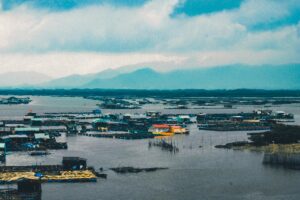 Photo by Nguyen Kiet on Unsplash
 This will be my fourth decadal installment of a short report to The Humanist’s readers on the state of our global climate and of society’s attitude.
It’s personal because during my childhood, being raised by curious, informed parents, I grew up aware that Earth sciences was experiencing a revolution, starting with the 1957/58 International Geophysical Year, Plate Tectonics, mapping the ocean’s floor, and global explorations that informed an ever-growing awareness of Earth’s finite nature.
It seemed to me, just a kid, that our society was receiving a clear warning. Along with a challenge: We needed to learn to rationally and constructively deal with the physical reality of Earth’s finite resources in a world of exponential human population growth and expectations.
After entering high school in 1969, I continued learning about these matters thanks to a preconditioned love for science, geography, history and tree climbing. I paid attention in those classes – especially the sciences, which were the most exciting for me because of how they unraveled long-standing mysteries and the surprising insights they provided.
Including the realization that we were falling into a terrible Faustian bargain with our increasing dependence on fossil fuels. It was obvious that we needed to move forward more thoughtfully. A stitch in time, and all that.
Among the many lessons I took with me upon graduation was a good understanding of the fundamentals of our global climate system. Or more descriptively: our global heat and moisture distribution engine. This included the physics of greenhouse gases, along with the undeniable fact of how fast society was increasing atmospheric GHG concentrations.
We learned how that was going to heat and energize our current climate regime well beyond the parameters that had enabled and nurtured humanity’s rise to complex society.
No great accomplishment; it’s pretty rational and self-evident stuff. All it took was curiosity and a willingness to learn by doing the homework and thinking about it. Oh, as for the tree climbing, that evolved into me becoming an unabashed tree hugger. Still am, on both counts. I also kept up on scientific news.
Of course, it’s a far cry from understanding climate’s basic framework to mastering the near-infinite details – especially the math needed to describe and study those details in a tremendously complex system in constant flux. Then learning to model those details with increasing fidelity to observations.
Still, the basics were straightforward enough. The more fossil fuels we burned, the more concrete we mixed, the more livestock we penned, the greater the already
huge amounts of greenhouse gases society was adding to our atmosphere. The more heat would be injected into our global heat and moisture distribution engine.
Unfortunately, continuing to learn about climate science while watching society’s reaction was shocking for me.
With people’s unquenchable thirst for ever more stuff – always bigger and with more flash – especially during those go-go Reagan, Bush, Clinton presidencies, with their conviction that endless growth and greed were nothing but good, rather than the cancer that they are.
Collectively, we found it all too easy to lie to ourselves about expert understanding and observations. This made it all too easy to justify ignoring the accumulating signs of our massive global weather system starting to break out of its millennia-old boundaries and rhythms.
With that in mind, I wrote “An Essay Concerning Our Weather” for the Nov/Dec 1995 Humanist magazine, still clinging to the assumption that evidence and understanding were power. The succeeding decades made it clear that, true as that may be, greed is overpowering and washes away truth and honesty like a flash flood.
In 2005 I wrote an improved version, “Katrina and Rita in Context,” where I pointed out the silliness of asking if they were caused by global warming. I stressed the point that we need to realize that we’re dealing with an unimaginably massive (think momentous) global heat and moisture distribution engine. No storm exists outside of our Anthropogenic Global Warming reality.
There is nothing “new” about what our weather system is doing. Adding more greenhouse gases means creating more heat to be moved from equator to poles – that means intensifying the storm systems that move the heat. Although around 90% of the heat gets injected into the ocean’s surface and then transported into the depths, where it gets circulated all over the globe, only to resurface at some point.
What’s new – unprecedented – was the speed with which we continued increasing those greenhouse gas concentrations, now at levels not seen in over three million years, and with current warming not experienced in about 125,000 years. Think about that. It’s only been a couple of centuries since we started putting the GHG pedal to the metal.
In 2015 I wrote “Concerning Our Failure to Appreciate the Weather.” It was written while the great global warming hiatus con-job was still a big thing – so big and ruthlessly pursued that even some legitimate climate scientists started forgetting the undeniable fundamentals and second-guessing themselves.
They were browbeaten into ignoring the fact that tracking all the places heat goes was impossible – especially within the ocean depths and their many circulation systems and cycles. The sun is always shining, and greenhouse gases are always doing their physics thing, 24/7/365. But the purveyors of doubt had more money and were able to purchase ruthless bullies, along with learning to master the internet into its tailor-fitted gigantic bullhorns of deliberate mass deception and brainwashing.
Although, in fairness, they had a pliant public to work with. Who wants to hear any bad news? Life was better for humanity than it had ever been; we expected nothing but more, more, more – me, me, me.
Who wants to hear about moderation or sharing with others? “My gosh, you’re telling me I need to think about moderating, doing more with less? I should think about sharing in the cost of nurturing Earth’s health? And humans on the other side of the world? You insane!? F off, get outta here. NOW!”
Who had time to think about Earth’s health – or why her health was important to our own health – when we were having such a great time?
Here we are, 2025. What’s left to write about? I mean, American citizens have abandoned our principles of fair-play, along with our onetime respect for democracy, learning, experts and honesty. Today’s attitude seems “me, me, me,” frothing with a sense of bitter vengeance lust. What is that about? Why are we doing this to ourselves? Is too much really worth it?
Okay, so it is what it is – we have crossed the Rubicon into a land of dystopia, while the physical reality of our climate juggernaut keeps marching toward a radically altered climate regime. Now what do I do?
For starters, I take it as it comes – meaning occasionally having to peel myself up off the floor and get back into the ring. It’s better than lying there. Besides, hope itself is a survival strategy in hopeless times. Akin to holding hands as we march into the dark. Life goes on, one day at a time, until the moment my death arrives. Same as it ever was. While the survivors keep on marching.
At 70, I have the luxury of giving up on the future, and becoming keenly aware of appreciating the now, today, and the wonder of my family and memories, along with the natural world I’m lucky enough to still experience everyday, before it slips out of our reach.
I take comfort in knowing I am an aware filament in the ongoing pageant of Earth’s Evolution, and I have been blessed with experiencing life from within a human awareness that no other creature has ever experienced, and that was good.