
Guarding Women’s Freedom, Protecting Everyone’s Rights: Why Humanists Must Keep Church and State Separate
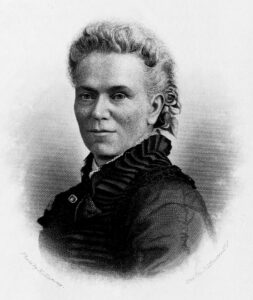 Matilda Joslyn Gage
 Women’s History Month is a time to honor not only the women whose names appear in our textbooks, but also those whose courage helped define the very boundaries of a just democracy. One such figure is Matilda Joslyn Gage, a suffragist and radical thinker who saw with remarkable clarity that women’s freedom—and the freedom of all marginalized people—depends on keeping government power separate from religious authority. At a moment when religious groups were lobbying for a “Christian Amendment” to declare the United States a Christian nation, Gage recognized that such a fusion of church and state would undermine fairness, equality, and basic rights, especially for women and Indigenous peoples.
For the Boulder Humanist Chapter of the American Humanist Association, Gage’s legacy speaks directly to our core principles. She understood that when government endorses or enforces religious doctrine, it is not morality that is elevated—it is inequality. Attempts in her era to abolish divorce, grounded in religious dogma, would have locked women into abusive and economically dependent marriages. Today, we see the same logic in religiously driven attacks on reproductive autonomy, LGBTQ+ rights, and public education: policy justified by divine command consistently sacrifices the freedom and dignity of those with the least power.
Humanism offers a different path. We respect the depth of religious consciousness in many people’s lives and defend everyone’s right to believe, worship, or not believe at all. But we reject divine authority as a basis for morality and public policy because it places some people’s alleged access to God above the shared, equal worth of all. Morality, in the Humanist view, emerges from human experience, critical reflection, empathy, and a commitment to minimizing harm. Public policy should be justified in those terms—not by appeals to scripture or revelation that many citizens do not share.
This distinction matters because the concrete impacts of religious policy dictates are so stark. When laws on marriage, divorce, and family life are shaped by religious rules, women and children often lose their safety and autonomy. When health‑care systems invoke religious doctrine to deny contraception, abortion, or gender‑affirming care, those already facing systemic discrimination—women, LGBTQ+ people, the poor, and people of color—bear the brunt of the harm. When religious beliefs are used to justify denying services, employment protections, or foster homes to those who do not conform, the vocabulary of “conscience” becomes a shield for discrimination rather than a protection of freedom.
Humanism insists that our laws must be grounded in equal concern for every person, regardless of gender, belief, or identity. That means:
No religious test for whose family is recognized and protected by law.
No appeals to divine will as a justification for denying health care or bodily autonomy.
No public policies that elevate one faith’s narrative at the expense of religious minorities, Indigenous traditions, or the nonreligious.
No “conscience” exemptions that allow institutions to ignore civil rights protections.
Far from being anti‑religion, this stance defends genuine freedom of conscience. People remain free to live by their own faith or philosophy, but they cannot enlist the state to enforce those beliefs on others. The measure of a law, for Humanists, is not its conformity to doctrine but its impact on human lives—especially on those who are most vulnerable to exclusion and coercion.
As we commemorate Women’s History Month, honoring Matilda Joslyn Gage means more than recalling her name. It means continuing her insistence that women’s rights, Indigenous rights, and civil rights are inseparable from robust separation of church and state. It means affirming, as Humanists in Boulder and beyond, that a just society must ground its morality and its public policies in our shared humanity, our capacity for reason, and our commitment to fairness—not in any claim to divine authority.
Today, we can see precisely the kind of harms Matilda Joslyn Gage warned about when religious doctrine shapes civil law. The rhetoric has shifted, but the pattern is the same: policies justified in the name of “faith” or “religious liberty” fall heaviest on women, LGBTQ+ people, religious minorities, and those with the fewest resources.
Reproductive Freedom and Bodily Autonomy
Across the country, laws restricting or banning abortion, limiting contraception access, and allowing religiously affiliated hospitals to refuse certain services are rooted in specific theological claims about when life begins and who controls a pregnancy. These policies do not ask what is best for the health, safety, or future of the pregnant person; they ask whether that person’s circumstances conform to a doctrine that many citizens do not share. Low‑income women, women of color, rural residents, and young people are the least able to travel or pay out of pocket for care, so they suffer the most.
From a Humanist perspective, this is exactly why divine authority cannot govern public policy. Decisions about pregnancy and health are profoundly moral, but the morality involved is human: the lived reality of an individual weighing her own body, relationships, and future. When the state enforces one religious answer to that question, it strips her of both autonomy and conscience. A Humanist, secular framework instead asks: Does this policy reduce suffering, respect bodily integrity, and protect the ability of all people—not just the privileged—to shape their own lives?
LGBTQ+ Equality and “Conscience” Exemptions
Another front where religious dogma is written into law is LGBTQ+ rights. In the name of “religious freedom,” some businesses, health‑care providers, and publicly funded social service agencies claim a right to refuse services to same‑sex couples, transgender people, or anyone whose identity conflicts with their theology. The language used—“sincerely held belief,” “conscience”—sounds noble, but the effect is concrete: people are denied housing, jobs, medical care, foster and adoption placements, or basic public services because of who they are.
This is the inversion that Humanists must call out. Freedom of conscience is vital, but it belongs to everyone, not only to those who can invoke a religious doctrine. When a provider or institution uses religious belief to deny another person equal treatment under law, conscience is no longer a shield for the vulnerable; it is a weapon against them. A Humanist approach insists that anti‑discrimination protections are non‑negotiable in the public sphere. People remain free to hold and express their religious views, but not to use state‑sanctioned roles or public funding to impose those views on others.
Public Education and the Battle for Minds
Public schools are another arena where religious policy dictates threaten fairness. Efforts to mandate school‑sponsored prayer, insert sectarian creationism into science classes, or censor discussions of gender, sexuality, and the full history of racism and colonialism are often justified as defending “Christian values” or “parental rights.” In reality, they privilege one religious and cultural narrative over all others and tell non‑Christian, nonreligious, LGBTQ+, and many Black, Indigenous, and other students of color that their identities and histories are suspect or unwelcome.
For Humanists, public education should be a shared space where students from every background can learn to think critically, encounter diverse ideas, and develop their own moral and civic identities. When religious doctrine controls curricula, curiosity is replaced with conformity, and the children most in need of inclusive, affirming environments are the first to feel the harm. A secular, Humanist commitment to evidence, open inquiry, and mutual respect is not a rejection of parents’ values; it is a recognition that in a pluralistic nation, no single theology may define truth for every child.
Health Care Institutions and Religious Control
Finally, the growing reach of religiously controlled health‑care systems shows how deeply doctrine can shape everyday life. When hospitals and networks governed by religious directives refuse to provide contraception, sterilization, abortion even in medical emergencies, or gender‑affirming care, patients may have no realistic alternative—especially in rural areas or where one system dominates. Providers themselves may be constrained from offering what they know is medically indicated.
This is not a marginal issue for a few people with “unpopular” needs. It is a direct clash between theological rules and the Humanist conviction that health care should be guided by medical evidence and the patient’s own values and choices. When doctrine overrules patient autonomy, it undermines both good medicine and basic fairness. A secular, Humanist approach insists that public health policy and access to care must not depend on the religious identity of the nearest hospital.
In each of these examples, the lesson Gage drew in her time is confirmed in ours: when religious beliefs are codified as law, it is never just about “protecting faith.” It is about who pays the price when one group’s vision of divine will becomes everyone’s legal reality. For the Boulder Humanist Chapter, these concrete harms underscore why we respect individual religious consciousness but reject divine authority as the basis for morality and policy in a diverse democracy.