
Humanism and the Veil of Ignorance
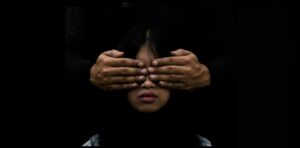 Photo by Charanjeet Dhiman on Unsplash
 A more humorous version of this essay is presented here: In Which Rawls Buys A Veil of Ignorance at Victoria’s Secret
Humanism has many virtues. It defends science in an age of conspiracy theories, secular government in an age of religious nationalism and critical thinking in an age of algorithmic hysteria.
But modern humanism faces a challenge.
Unlike many philosophical and religious traditions, it lacks a single moral image that immediately captures its ethical vision. A secular Golden Rule.
Christianity has “love thy neighbor.” Buddhism has compassion and interconnectedness. Ubuntu has “I am because we are.”
What does humanism have?
Quite a lot, actually.
Human rights. Human dignity. Scientific skepticism. Democracy. Compassion.
What it lacks is not values. It lacks a single image that ties those values together.
That may sound unfair, but it points to something important. Humanism often excels at explaining what it opposes: superstition, dogma, pseudoscience, authoritarian religion and tribal irrationality. It is less clear about a single moral image that emotionally organizes its ethical vision.
Yet humanism already possesses one of the greatest moral ideas of the modern age. It simply has not fully embraced or utilized it.
The philosopher John Rawls called it the “veil of ignorance,” and it may be the closest thing secular society has to a universal moral compass.
Rawls’ thought experiment is simple. Imagine designing an entire society without knowing who you will become inside it. You do not know your race, intelligence, wealth, religion, health, nationality, gender, talents, disabilities or social class. Extending Rawls’ idea into the modern world, you do not even know when you will be born. You may arrive in 1950, 2025 or 2080.
Only after the rules are written does fate assign your position.
You might be born into extraordinary privilege or crushing poverty. You might enter the world in a refugee camp, a war zone, a collapsing state or a gated community with excellent landscaping and emotionally exhausted labradoodles.
You might be brilliant. You might struggle to read. You might be born healthy or with severe disabilities. You might live to 100 or die before kindergarten. You might grow up loved, neglected, protected, imprisoned, connected, forgotten, feared, admired or invisible.
You might be a child laborer in 1840, a factory worker in 1920, a suburban retiree in 2025 or a climate migrant in 2080.
You are building a society without the slightest idea of your role inside it.
So, what society would you build?
The brilliance of the veil is that almost everyone immediately understands the fairness of the question. You do not need theology, metaphysics or sacred revelation to grasp its moral force. A progressive understands it. A conservative understands it. A retiree understands it. Well, maybe some do.
And that simplicity matters.
Because the veil transforms compassion from a feeling into a structure. It does not merely ask us to “be nice” or “love thy neighbor.” It asks us to build institutions we would consider fair before luck distributes suffering unevenly.
That may be one of the most important moral insights ever produced by secular philosophy.
It may also be one of the least politically achievable ideas ever proposed.
Almost everyone agrees at first with the veil, at least in theory. Then somebody proposes actually applying it, and within thirty seconds someone is yelling, “This is commie-pinko Marxism!”
But Rawls was not arguing for absolute equality or the abolition of markets. The veil does not oppose success, ambition, wealth, excellence or hard work. Societies need innovators, entrepreneurs, artists, scientists, teachers and people willing to take risks. Human flourishing depends on talent, effort, creativity and achievement. The veil simply asks a devastatingly fair question:
What inequalities would still seem acceptable if you did not know whether you would benefit from them?
Ironically, if a version of the veil had been spoken by Jesus instead of a Harvard philosopher, many of the same people denouncing it as socialism might instead praise it as compassion, morality or the Golden Rule… before totally ignoring it.
Of course, there are serious objections to Rawls. Some people argue that liberty matters more than fairness, that unequal rewards are necessary for innovation and ambition, or that abstract thought experiments cannot capture the complexity of real societies. But many objections to the veil eventually circle back to a simpler and more uncomfortable instinct: Once people know where they landed in the social order, they become remarkably skilled at explaining why their own advantages are justified, necessary and earned.
And this hypocrisy is not uniquely conservative, liberal, religious, secular, wealthy or poor. It is deeply human. Human beings are extraordinarily talented at constructing moral systems that somehow place themselves near the top.
That is precisely why humanism needs the veil.
Christianity asks believers to love their neighbors. Rawls operationalizes that instinct. He transforms compassion into institutional design. The question is no longer simply, “Are you a good person?” The question becomes: “What kind of society would a good person design before knowing who they would become?”
That distinction matters enormously.
A society does not require perfectly compassionate citizens in order to function morally. It requires institutions that restrain the unfairness produced by luck, tribalism, greed, fear and inherited advantage.
Even while resisting the veil in practice, societies continually recreate pieces of it and then violate it.
Public education is built on a Rawlsian ideal: Every child deserves opportunity regardless of the accident of birth. But in practice, wealthy districts protect educational advantages through property values, school boundaries, private tutoring and inherited social capital.
Voting rights are grounded in the Rawlsian principle that every citizen deserves equal political voice. Yet modern democracies constantly distort that equality through money, gerrymandering, selective access, vote suppression and tribal manipulation.
Universities speak endlessly about meritocracy while quietly preserving legacy admissions, donor influence, elite networking pipelines and inherited advantage.
Social Security and Medicare may be the most successful Rawlsian programs in American life. Their popularity reveals something important about human nature: People become far more willing to support systems of fairness once vulnerability becomes personal and imaginable. That is what makes those programs politically fascinating. They succeed because vulnerability eventually becomes universal. Everybody ages. Everybody weakens. Everybody eventually glimpses dependence waiting somewhere ahead.
The abstraction becomes personal.
And once vulnerability becomes imaginable, humans suddenly become far more willing to support systems of fairness.
This may explain why many people defend Medicare ferociously while resisting other forms of social support. The veil works best when people can vividly imagine themselves on the losing side of fate.
The veil also creates an uncomfortable but revealing global question: Which modern societies come closest to Rawlsian fairness, and which drift furthest from it? The answer is rarely absolute, but the pattern is recognizable. Countries that soften the birth lottery through universal healthcare, accessible education, low corruption, social mobility and strong social safety nets often move closer to Rawlsian ideals. Countries where access to healthcare, education, safety and opportunity are heavily determined by inheritance, zip code, wealth, geography or family connections tend to drift further away from Rawlsian ideals.
Civilization repeatedly gestures toward the veil. Then self-interest begins negotiating exemptions.
But the modern world has expanded Rawls’s question in an extraordinary new direction.
The veil no longer asks only who you will become.
It asks when.
If you did not know whether you would be born in 1950, 2025, or 2080, how differently might you think about climate change? Federal debt? Infrastructure? Resource depletion? Political stability?
Modern societies routinely consume benefits in the present while exporting costs into the future.
The future has no voting bloc.
That may be one of the greatest violations of the veil in modern civilization.
Climate change becomes morally explosive behind the veil because no rational person would willingly gamble that they might be born into existential ecological instability simply so earlier generations could enjoy slightly cheaper energy or greater convenience. The same logic applies to unsustainable debt, collapsing infrastructure and institutional decay. We are quietly borrowing against people who do not yet exist.
The veil forces us to imagine becoming those people.
And this is where the connection to humanism becomes especially powerful.
Humanism already accepts that science corrects human cognitive bias. Science teaches us that our intuitions about the universe are often wrong. The Earth feels stationary, but it moves. Matter feels solid, but it is mostly empty space. Time feels absolute, but it bends.
The veil performs a similar function ethically.
It reminds us that our intuitions about fairness become deeply distorted once self-interest enters the room.
That insight should sit at the center of modern humanism. The American Humanist Association should consciously elevate the veil of ignorance into the secular Golden Rule of modern humanism. Maybe even capitalize it. The Veil of Ignorance!
Not as dogma. Not as secular scripture. Not as ideological conformity. But as a recurring civic question that challenges every tribe, every institution, every ideology and every generation:
Would we still choose these rules if we did not know who, or when, we would become?
The Veil of Ignorance may be the fairest moral idea of the modern age.
Its failure does not expose the weakness of the idea.
It exposes the weakness of us.
If the American Humanist Association consciously embraced the Veil of Ignorance as the secular Golden Rule of modern humanism, it would not suddenly solve politics or eliminate disagreement. Human beings would remain tribal, self-interested, ideological and imperfect. But the veil could become a recurring civic discipline: a habit of asking whether we would still support a system if we did not know our own place inside it.
The veil does not eliminate political disagreement. It civilizes it.
It forces every ideology, every institution, every generation and every tribe to confront the same uncomfortable question: Would these rules still seem fair if fate had placed us somewhere else?