
The Problem of Plastic: Why Humanists Should Care
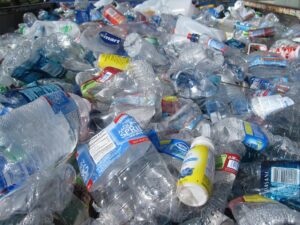 Photo by tanvi sharma on Unsplash
 Your feelings toward plastic are likely rooted in the pop-culture touchstones of your generation. Could it be DC Comics’ “Plastic Man” who debuted in 1941? Is it your mom’s Tupperware parties or your first Lego set in the 1950s? In 1967 it was likely the opening scene of “The Graduate” when plastics is the career advice given to Dustin Hoffman’s character. Further on, it could be the early 70s Plastic Ono Band, or Laura Palmer’s body found wrapped in plastic on the TV show “Twin Peaks” in 1990. It might even be the 1997 song “Barbie Girl” by the band Aqua, that told you that life in plastic was fantastic.
The culture stopped celebrating plastic openly as the century turned. It was still as ubiquitous, more so every day, but now we saw shocking pictures of the Great Pacific Garbage Patch and leatherback sea turtles mistaking floating plastic bags for their jellyfish prey. Now we knew there was no “away” when we threw plastic away. Some started recycling plastic but the options were limited. People felt good putting plastic in the recycling bin, unaware that the actual process of recycling plastic was complicated and limited facilities existed.
What exactly makes plastic such a problem? First, almost all plastics are produced from fossil fuels, often with chemical additives, with all the associated environmental harms from fossil fuel exploration and drilling. Second, plastic is permanent, meaning it does not naturally decay or biodegrade. Third, unlike glass, metal and paper, which can be recycled with little or no loss of quality and purity, plastic cannot be recycled to its original state. There is always a decrease in quality which limits possible uses of the recycled material. Originally, recycled plastic drink bottles became park benches or playground surfaces, but today product packaging and even clothing can be made from recycled plastics.
We can see the plastic problem at a macro level, in the intact bottles in landfills, the chunks of Styrofoam on beaches, the marine mammals and birds entangled in discarded nylon fishing nets. While plastic does not break down into other compounds, it does fragment into smaller and smaller units, all the way down to the microscopic level, and there, to paraphrase Shakespeare, is the rub.
Microplastics are particles from five millimeters down to one micrometer in diameter. They are called primary microplastics if they start out at this size, such as microbeads in toothpaste and exfoliating products, and plastic pellets known as nurdles which are used in the manufacture of plastic products. These enter the environment through discarded products, substances washed down drains, or nurdles spilled from trucks or trains during transport. Secondary microplastics are smaller bits of larger plastic items released as the items break down in the environment, including the aforementioned bottles and fishing nets; microfibers shed from nylon, polyester, acrylic, fleece, or moisture-wicking, quick-drying materials; plus plastic bags and containers, tea bags and worn tires.
Microplastics are in the air and water around us and in the ground we walk on. It follows that they are in the dust and dirt that rises from the ground as we walk, in the air we inhale, and in the water we drink. From there they get into the blood and organs of plants and animals, and into humans from the environment and the plants and animals we eat. Even worse is what we are exposed to in buildings and homes, from the breakdown of fabrics and the items in which our food is cooked, served and stored. In short, in the year 2026, human beings are made of organic compounds, minerals and plastic. That makes this a humanist issue.
You may wonder why this matters. How can plastics affect human biology? Microplastics can become nanoplastics, smaller than one micrometer in diameter, small enough to be incorporated into cell membranes or pass through cell membranes into cells. These nanoplastics often carry drugs, chemicals, metals or other contaminants on their surfaces.
Research into the human health effects of microplastics and nanoplastics is in its infancy. Microplastics have been detected in every human organ and bodily fluid, including the placenta and breast milk. Studies have linked the presence of microplastics with inflammatory processes, metabolic changes, organ development, immune responses and disease processes. Causation has not yet been fully established for the plastics themselves, but there is robust evidence that many of the substances carried by plastics into human cells can cause developmental delays, endocrine disruption and even cancers.
So, what can we do? We can prevent plastics from entering the environment in the first place, removing them from household products or limiting their production and use. Once microplastics are in the environment they are much harder to remove.
We can collect and remove plastics from the environment before they break down or detect and remove microplastics through mechanical means, though this cannot capture the smallest particles, even if we modify water treatment plants with smaller mesh sizes than currently used. Once removed, there is still the problem of how to dispose of the plastic without releasing microparticles. Even bacteria capable of consuming and digesting plastic into non-toxic substances cannot handle the sheer volume of plastic waste already in the world. We need improved technologies for detecting microplastics in the environment. Finally, we need legislation and regulations to limit the use of plastics in industrial processes and the manufacture of consumer items.
These improvements are less difficult in developed countries with the technological ability and political will to act, but we share the air and water with less developed countries and those like ours at the moment with fewer opportunities for change. We must share technology between developed and developing countries and share the policies and legislation that work.
In the case of plastics, we need to think beyond the old Earth Day chant of reduce, reuse, recycle. Better than reducing the use of single-use plastics and products containing microbeads is not to buy them at all; alternatives already exist. Wear natural instead of synthetic fibers. Reusing is problematic for plastics since the wear-and-tear of repeated use will release more microplastics. Recycling is necessary if you must use plastic products. In an ideal world, and as a goal to work toward, we need to develop alternative products that are non-toxic, reusable and recyclable.
A few final, practical notes. Don’t take the plastic straw restaurants give you with your drink. Don’t take the plastic lid for your cup if you aren’t planning to walk around or drive with it. When ordering takeout, request no plastic utensils and use your own instead. If you want a disposable option, choose ones made from plants or other compostable materials, which will at least degrade safely if you don’t compost them. Instead of plastic bags, use reusable bags or containers, and again favor those that are made from non-toxic materials and/or material that can be safely recycled or composted. Glass or metal products are good options.
Remember, with plastic, there is no such thing as throwing it away.