
I Was a Teenage New Atheist
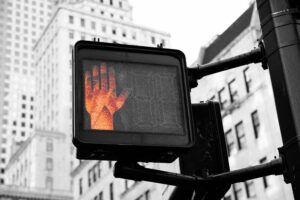 Photo by Kai Pilger on Unsplash
 I never set out to become an atheist. My path to atheism started with a sincere attempt to be a more devout Christian. I was raised in a liberal, Methodist Christian family. We’d go to Easter Sunday and Christmas Eve services, but never attended weekly church consistently. Near the end of High School, I decided that if I really did believe in Christianity, I should start taking my faith more seriously. I began reading the Bible daily and attending church more. However, spending more time engaging with the Bible and Christianity brought with it an unexpected problem. To put it bluntly, the more time I spent thinking about the contents of the Bible and the existence of an all-loving, all-powerful God, the less it made sense to me.
While I wrestled with common issues like the problem of evil and the concept of Hell, arguably my most significant hang up came through the debate over gay marriage. The year was 2012 and the fight to legalize gay marriage was reaching its climax in the United States. I personally couldn’t think of a good reason that gay people shouldn’t have equal rights. When I asked my conservative friends about it, I found their responses about “hating the sin and not the sinner” to be unconvincing. Plus, I was having a hard time taking seriously homophobic Republicans, like the thrice married Newt Gingrich, as they hypocritically clutched their pearls over the “sanctity of marriage.” As someone whose parents divorced, I figured that if there ever was a sanctity of marriage, straight people had destroyed it.
Still, I hesitated. I worried that I was being arrogant in my own beliefs. I may not be able to come up with a good reason to oppose gay rights, but maybe God knew something that I didn’t. I tried asking more Christians, but I kept getting conflicting answers. By 2012, many liberal Christians supported gay marriage. Both the pro-gay marriage and the anti-gay marriage camps contained sincere Christians with self-described deep relationships with God. Two contradictory positions can’t both be right. If all of these believers really had a relationship with God, shouldn’t their answers be the same or at least similar? I had a hard time imagining that God would purposely “reveal through prayer and worship” different answers to such controversial and consequential issues. What’s the point of a one true God and objective Truth if the correct answers arrive as successfully as a game of telephone?
As a result of this debate, I began to reflect on the arbitrary nature of people’s beliefs. A Christian’s views on homosexuality seemed to have less to do with scripture or a personal connection to God and more to do with politics, societal norms, and their own experiences. This is especially significant given that many of the liberal Christians in 2012 who supported gay marriage didn’t support it in 2000. Were they biblically correct then or biblically correct now? What special “God wisdom” does one half of the country have that the other half doesn’t?
I still wanted to believe in God, but ultimately these doubts and concerns became too overbearing. The resolve of my faith couldn’t withstand my questions. Before long, I begrudgingly realized that I was becoming an atheist. I’d believed in God by default for my whole life. Up to that point, I was living under the assumption that there was an afterlife and God had some kind of “divine plan.” Suddenly, all of that was gone. Rather than feeling liberated, I felt deceived by the culture at large. I’d been duped and that pissed me off.
With teenage existential angst building up inside of me, I desperately needed an outlet to validate what I was feeling. I quickly discovered YouTube videos of the comedian George Carlin ranting about how “religion is bullshit.” Off to a good start! From there, I stumbled upon videos of famous new atheists, like Richard Dawkins, Christopher Hitchens, and Sam Harris. New Atheism is a loose movement of provocative and confrontational atheists that gained popularity in the United States and Europe after the 9/11 attacks and the growing political influence of evangelical Christians during the presidency of George W. Bush. Going beyond simply not believing in God, the new atheists were bluntly anti-religion. They looked around at how much suffering and destruction had been committed in the name of religion and determined that the world would be better off without religion altogether. They didn’t care if they were offensive. In fact, they seemed to relish in it.
For example, in his best selling book, The God Delusion, Dawkins boldly suggests that “the God of the Old Testament is arguably the most unpleasant character in all fiction: jealous and proud of it; a petty, unjust, unforgiving control-freak; a vindictive, bloodthirsty ethnic cleanser; a misogynistic, homophobic, racist, infanticidal, genocidal, filicidal, pestilential, megalomaniacal, sadomasochistic, capriciously malevolent bully.” As an 18 year old reading this line for the first time, it really impressed me. This kind of edgy commentary was extremely therapeutic to me. It validated my pain and reassured me that I was right to be angry. I quickly found other New Atheism books, such as The End of Faith: Religion, Terror and the Future of Reason by Sam Harris and God is not Great: How Religion Poisons Everything by Christopher Hitchens. These thinkers opened my world to a new way of critically engaging with ideas that I had once held up as sacred.
For a couple of years, I bought into the new atheist perspective. However, as I began studying philosophy in college, I realized that the new atheist analysis of religion is relatively unsophisticated and reductive. Writers like Dawkins, Hitchens, and Harris more often than not overlook the complexities of religious experience and reduce religious practice down to the literal words in holy books. To them, religions were nothing more than falsified hypotheses about how the universe works. In actuality, religion provides community, meaning, and direction to people’s lives that goes far beyond a literalist interpretation of scripture or basic truth claims. In lieu of thoughtful engagement, the new atheists often came across as being a little too proud of themselves for determining the world isn’t actually 5000 years old and that a talking snake almost certainly didn’t trick a woman into eating a magical fruit. After a few semesters of studying academic philosophy, their smugness was no longer impressing me.
Unfortunately, the consequences of the new atheists’ arrogant “philosophy 101” rhetoric goes beyond sloppy analysis. Their messages generate real harm, especially towards Muslims. At least since the 9/11 attacks, if not well before then, islamophobia has been an increasingly severe problem in the United States and other western countries. For decades, Muslims, and anyone who even looks remotely “Middle Eastern,” have been unjustly profiled, with far too many becoming victims of hate crimes. Everyone, regardless of whether they’re religious or not, should be able to live with dignity and safety. Instead of taking a bold humanist stance to counter this bigotry, many of the new atheists opted instead to further inflame anti-Muslim sentiment.
One of the worst offenders of atheist islamophobia is Sam Harris. He views Islam as a uniquely dangerous religion, asserting that “Islam is the mother lode of bad ideas.” According to Harris, moderate, peaceful Muslims are failing to follow their holy text to its logical conclusion given the Quran’s unique endorsements of religious violence and martyrdom. As I mentioned before, this kind of reductive analysis of religion fails to capture how most people actually engage with religion. By insisting on a simplified relationship between text and belief, Harris grossly downplays how geopolitics and colonialism have contributed to religious extremism and violence in the Middle East. If we want to talk about a mother lode of bad ideas, we’d be better off starting with the “ideas” behind United States foreign policy: Western chauvinism, American exceptionalism, toppling democratically elected leaders, installing pro-corporate dictators, arming extremist groups, and pursuing “never-ending wars” for the sake of oil, war profiteering, and global dominance. I want less religious extremism in the world, but islamophobia and neoconservative foreign policies just produce more religious extremism, while threatening the safety of the millions of peaceful and loving Muslims around the world.
Islamophobia wasn’t the only way the new atheists started disappointing me. Dawkins has had his own issues with sexism and more recently has been parroting transphobic talking points. Harris has been critical of the Black Lives Matter movement on his podcast and Christopher Hitchens even supported the Iraq War. As instrumental as the new atheists were in helping me find my footing as a non-believer, the same progressive inclinations that had led me to atheism in the first place were now calling on me to leave the new atheists behind.
However, the reactionary tendencies of the new atheists did help clarify what my real problem had been the entire time. While I did genuinely lose my faith in God, beyond some initial existential growing pains, that wasn’t really a big deal for me in the grand scheme of things. I was fortunate enough to not experience any religious trauma growing up and faced no significant social backlash becoming an atheist. I realized that what really got my blood boiling wasn’t religious faith, it was conservatism. I’m disgusted with racism, sexism, homophobia, and transphobia. I despise the demonization of immigrants. I’m infuriated by attacks on science and the denial of human-caused climate change. It just so happens that conservative evangelical Christians are among the loudest and most influential groups to embody these terrible ideas and reinforce the systems that perpetuate these harms in the United States. I don’t care that when faced with the biggest mysteries of the human condition, these conservative Christians reached supernatural conclusions. I’m not bothered that they believe Jesus is the son of God. If anything, I wish they’d behave more like Jesus.
I’ve lived in North Carolina my entire life. As a lifelong resident of the American Bible Belt, I know firsthand what it’s like to exist in a predominantly Christian culture. While I’m not exactly thrilled with the religiosity of the American South, I can imagine an alternative “Christian culture” that would likely be a much better place to live. I can imagine a Christianity concerned first and foremost with the “least of these” that fights on behalf of the oppressed. I can imagine a Christianity, not unlike the Christianity of Reverend Dr. Martin Luther King Jr., that sees religious faith as necessarily tied to fighting racism, militarism, colonialism, and poverty. I can imagine a Christianity that, in recognizing that a camel definitely can’t walk through the eye of a needle, appropriately views the co-existence of billionaires and impoverished people as a moral crime against humanity. In fact, there are Christians, as well as other believers, all over the United States today that do embody these loving values through their faith. Unfortunately, they don’t come even remotely close to being the most influential or culturally recognized Christians in the country. The loudest and most influential Christians as Christians in the United States are white, conservative evangelicals that bring with them a destructive agenda of Christian nationalism, bigotry, anti-poor class warfare, and science denial.
When I was still in my edgy new atheist phase, I had a habit of saying that if Jesus returned, American conservative Christians would just crucify him all over again. Pre-Trump, I also said that if Satan ran for president as a pro-gun Republican that was tough on crime and immigration, Christians would flock like rabid sheep to vote for him. Then Trump entered the 2015 Republican primary and won the 2016 presidential election. With all of their moral righteousness and arrogance, the loudest American Christians embraced a sexual predator, adulterer, and greedy con-man who is about as far removed from Jesus as you can possibly be. Many outright applauded his cruelty and laughed as he mocked women, inflamed racism, demonized LGBTQ+ people, and threatened immigrants. While not all of them personally approved of Trump’s behavior, they determined that his racism, sexism, transphobia, homophobia, xenophobia, and mountain of lies were at the very least not deal breakers for supporting him. As Christians, they elected a devil. Twice.
Perhaps someday I’ll exist within a cultural context where the label “atheist” doesn’t mean much. But given America’s flirtation with Christian nationalism and the persistence of conservative religious bigotry, I remain resolute in my atheism. Mine is an atheism that has rejected the reductive antitheism of the new atheists and instead prioritizes progressive humanist values. Still, after all of these years, I’ve kept the New Atheism books on my bookshelf. Whether its Dawkins’ The God Delusion, Hitchens’ God is Not Great, or Harris’ The End of Faith, they remain displayed as part of an ongoing conversation and intellectual journey. For me, they represent a specific time and place in my life. The new atheists, for better and for worse, provided an outlet to express my frustrations with losing my religion. I can appreciate them for that, but now I’ve moved on. I was an edgy teenage new atheist angrily shaking my fist at God. Now, I’m a slightly less edgy adult atheist angrily shaking my fist at just about everything else. The more things change, the more things stay the same.