
Representation Matters: Montana State Representative Brian Close
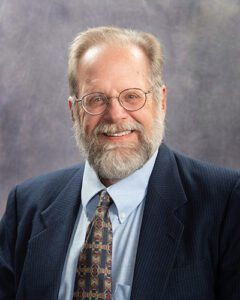
This is part of The Humanist’s recurring series highlighting openly nonreligious elected officials across the nation. Because of the work of the Center for Freethought Equality, the political and advocacy arm of the American Humanist Association, there are over 130 elected officials at the local, state, and federal level who publicly identify with the atheist and humanist community serving in 35 states across the country. Join the Center for Freethought Equality to help politically empower the atheist and humanist community—membership is FREE!
The Center for Freethought Equality’s advances have been groundbreaking. Prior to the 2016 election, there were only five state legislators and no members of Congress who publicly identified with our community; because of its efforts, today we have seventy-seven state legislators and three members of Congress – Yassamin Ansari (AZ-3), Jared Huffman (CA-2), and Emily Randall (WA-6) – who publicly identify with our community. It is critical that our community connect and engage with the elected officials who represent our community and our values—you can see a list of these elected officials here.
Montana State Representative Brian Close
Representing Bozeman, Montana in District 65
“Since I do not believe a god will fix the sewers, I always look for human answers to human problems.”
Brian Close has an extensive record of public service in Bozeman, MT, where he has lived for over thirty years. Throughout his time as City Commissioner, Close played a pivotal role in establishing the city’s public transit system, advocated for smoke-free public spaces, and contributed to local government reform, notably authoring Bozeman’s first-ever city charter.
Close assumed office in January 2025 after winning the general election in November 2024. As a legislator, he sits on the House Committees for Taxation and Human Services. Close is a vocal advocate for reproductive freedom and LGBTQ+ rights, emphasizing the importance of dignity and respect for all individuals – a stance that resonates with humanist principles. Close is an atheist.
What motivated you to run for office?
I have been involved in public service since moving here in 1994. I chaired the para-transit board, was integral in starting a public transit system, served on the planning board, helped establish the park district, and co-wrote the charter for the city of Bozeman. So the state legislature was the next logical place to serve. I believe government can solve problems common to all of us.
What are your policy priorities and how does your nonreligious worldview impact your policy platform?
Since the Democrats have only 42 seats in the House in Montana, I have been pursuing policies that should gain bipartisan support. Last session I reformed state public transit law and this session, I am working to reform our adult guardianship and conservatorship system.
By sticking to broader issues I have been able to form alliances with conservative republicans. For example, the Lieutenant Governor, a religious conservative, is supporting my efforts to reform guardianships. Also, as a tax attorney, I have become a resource for members from both sides of the aisle. I am always happy to explain something if asked.
I am respectful to everyone. There are only 100 of us here in the house. I am respected and used as a resource by members of both parties. The Republican Majority Leader even co-sponsored my guardianship reform bill. I argue using facts, and never get personal.
Being a person driven by facts, I have occasionally weakened or even stopped bad bills with reasoned argument. Since I do not believe a god will fix the sewers, I always look for human answers to human problems.
Sometimes I can find common ground with very religious conservative Republicans. I remember voting against extending the death penalty to a new class of offenses. I got there because I thought it was bad policy. A conservative colleague voted against the bill because he truly believed in “do not kill.”
Why was it important for you to be open about your nonreligious identity?
When approached by a group of conservative preachers, I told them straight out that I was an atheist. I also met with them, demonstrated detailed knowledge of the Protestant Reformation, and thanked them for their prayers. They are comfortable reaching out to me.
So I don’t normally broadcast my atheism, but I also don’t want to be in the position of appearing to mislead anyone.
How did voters respond (if at all) to your openness about your nonreligious identity?
My district is staunchly Democratic, with religious Democrats strongly oriented to the tradition of social service. So my record of public service and liberal views makes my non-religiosity a non-issue. The 30% hard core Evangelicals in my district would never vote for me anyway, but as a public servant, when they need me to go to bat for them with a state agency, I do it.
Use this link to learn more about Representative Brian Close’s work in the Montana legislature.