
Global Perspective: An Interview with Maggie Ardiente, New President of Humanists International
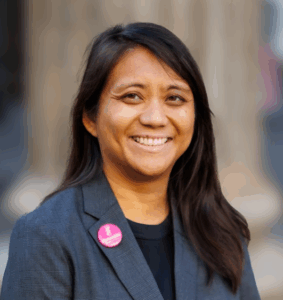 Maggie Ardiente
 Maggie Ardiente is the newly elected President of Humanists International, bringing decades of leadership, fundraising, and advocacy experience to the role. A Filipino American humanist, she previously served as Director of Development and Communications at the American Humanist Association, where she spearheaded campaigns that significantly expanded organizational capacity and co-launched the influential Freedom of Thought Report. Ardiente has also served as Board President of the Secular Coalition for America and is a graduate and former board member of The Humanist Institute. Known for her passion, vision and global perspective, she is committed to strengthening humanism worldwide.
In this interview with Scott Douglas Jacobsen, Ardiente outlines her vision as President of Humanists International. She emphasizes two immediate goals: expanding fundraising capacity and growing membership with integrity. Ardiente highlights her commitment to diversity, building on Andrew Copson’s legacy of elevating voices from the Global South and youth leadership. She discusses the Luxembourg Declaration on AI, the focus on Asia in Freedom of Thought initiatives and the challenges of protecting at-risk humanists. Ardiente also underscores the importance of leadership training, donor trust, and global collaboration, while expressing hopes for a vibrant 2026 World Humanist Congress in Ottawa.
Scott Douglas Jacobsen: You have a strong legacy of fundraising and enthusiasm, knowing how to address a crowd. As you begin your presidency, what two measurable goals define your entrance as President of Humanists International?
Maggie Ardiente: Thank you, Scott! Achieving fundraising success is certainly one of our most important goals, and I aim to utilize my skills and network to support HI’s fundraising efforts. Another measurable goal will be increasing the number of member organizations under Humanists International; however, I don’t intend to simply grow our numbers without ensuring each and every one of our member organizations are led by humanists who represent humanism with integrity and accountability. We want quality and quantity.
Jacobsen: Which one legacy from Andrew Copson’s tenure will you keep, and which one will you build on?
Ardiente: One of the most important strategies Andrew established was diversifying the Board of Directors, working to cultivate humanist leaders from outside Europe and North America. Countries in the Global South have unique challenges, and they won’t be easy to address if their voices aren’t heard. Andrew established specific board seats for humanists from Asia, Africa, and Latin America, and we have a board seat for a leader under 35 years of age, ensuring youth voices are also part of decision-making. I intend to build upon Andrew’s commitment to diversity and inclusion by seeking greater opportunities to uplift humanist leaders from all across the globe, whether through board service, leadership training, or speaking opportunities at our annual World Humanist Congress.
Jacobsen: How will you translate the “Luxembourg Declaration on Artificial Intelligence and Human Values” into concrete policy asks?
Ardiente: I leave that to the policy experts leading our many member organizations around the world. Each country is dealing with AI in unique ways, but what’s great about the Luxembourg Declaration is how comprehensive it is in addressing the ethical, environmental, and human impact of AI that transcends borders. Only humanists coming together, using human-powered collaboration, connection, and thought, could’ve created such a valuable statement.
Jacobsen: Which three jurisdictions will you prioritize from the latest Freedom of Thought findings?
Ardiente: This is where I lean toward the expert Humanists International staff, most notably Nick Bull, who recently joined the team following the excellent leadership of Emma Wadsworth-Jones, and previously worked at organizations like Amnesty International and the Asian Forum for Human Rights and Development. But I’m particularly excited about our increased focus in Asia and the growth of humanist organizations since our General Assembly in Singapore in 2024. As a Filipino American, I know religion is very powerful in countries like the Philippines. On the other hand, “secular” countries like China, Japan, and South Korea don’t currently have humanist groups — and I hope we do one day.
Jacobsen: How will you scale rapid-response protection and safe-relocation pathways for at-risk humanists?
Ardiente: Humanists International’s network of humanist organizations across the country is the only one of its kind, and over the years, thanks to the launch of our Humanists At Risk program and strong relationships with member organizations, we’ve responded to over 600 humanists and non-religious people seeking support and provided in-depth support — in the form of advocacy, public awareness, grants, pro bono legal support and more — to nearly 100. But we’re a small organization with a small budget, and requests for help regularly exceed our capacity to manage. We must focus on humanist cases that our member organizations have deemed critical and high-risk, while ensuring our actions are effective in securing them safety.
Jacobsen: As Board President of the Secular Coalition for America, how will you leverage that coalition to expand HI’s advocacy?
Ardiente: Secular Coalition for America is a proud associate member of Humanists International, and SCA serves as a resource for HI’s advocacy efforts in Washington, DC. Prior to the current Administration, HI worked with SCA and its member organizations (which includes Humanist International member organizations such as the American Humanist Association and American Atheists) on international religious freedom advocacy, and SCA has supported the dissemination of HI’s Freedom of Thought Report to government institutions and key partners in Washington, DC. With the 2026 World Humanist Congress no longer being held in Washington, DC, I intend for SCA to play a major supportive role when it’s in Ottawa next year.
Jacobsen: Your AHA tenure included a million-dollar matching campaign. It doubled the capacity. What is the HI analogue?
Ardiente: In my opinion, it was the creation of the Freedom of Thought Report in 2011 that brought Humanists International to the next level in global advocacy and visibility. I like to take a little credit for the report, as it was during my time at the American Humanist Association that I helped create the first iteration of the report after we were invited to meetings with the US State Department to report discrimination cases against humanists. Humanists International had the reputation and expertise to carry it far beyond my imagination by creating a network of volunteer researchers, bringing the report to major institutions across the world, and establishing the Humanists At Risk program to support humanists being persecuted in their home country. While it wasn’t a million dollars, the Freedom of Thought Report helped further the professionalization and growth of Humanists International, and that’s priceless.
That being said, a million dollars can be a game-changer for any organization, and that’s why Humanists International must continue to build trust among its donors and supporters to inspire such a level of giving in the future. Looking back at our history, Humanists International has benefitted from the generosity of supporters who have included the organization in their will or estate plan, ensuring our work continues for future generations of humanists. It’s a humanist way to leave a legacy — since, obviously, none of us can take our money with us after we die.
Jacobsen: As a graduate and former board member of The Humanist Institute, how will you formalize leadership pipelines?
Ardiente: Leadership trainings, networking opportunities and sharing resources are all part of Humanists International’s ongoing work, but we intend to formalize this even more at the next World Humanist Congress in 2026, as future Congresses will be primarily led by Humanists International ourselves, rather than the host organization. We’ve heard loud and clear that humanist groups are seeking leadership training and mentorship to serve global audiences, and I intend to ensure future humanist leaders get access to the resources they need, whether through webinar trainings hosted by Humanists International or resources from our member organizations.
Jacobsen: Ahead of the World Humanist Congress in Ottawa (August 7–9, 2026), what are your big hopes?
Ardiente: While I’d love to see over 1,000 attendees at the World Humanist Congress, I especially want attendees to walk away after the event feeling hopeful and ready to take action. I hope humanists are inspired to start humanist organizations in their countries, especially in the Global South. And I hope attendees learn from what other humanist organizations are doing to increase their humanist activities in their respective countries.
Jacobsen: Any favourite humanist (or humanistic) quotes?
Ardiente: I always reference my favorite quote from the late great science fiction writer Isaac Asimov that perfectly sums up humanism and gives me hope whenever I feel worried about the state of the world: “Never can we sit back and wait for miracles to save us. Miracles don’t happen. Sweat happens. Effort happens. Thought happens. And it is up to us humanists to help—to expend our sweat, our effort, and our thought. Then, there will be hope for the world.”
Jacobsen: Thank you for the opportunity and your time, Madam President.