
Ann Druyan on Science in a Shared Cosmos
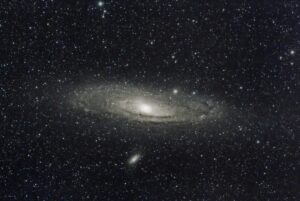 Photo by Flavien Beauvais on Unsplash
 Ann Druyan (born June 13, 1949) is an American documentary producer, author, and activist renowned for her contributions to science communication. She co-wrote and produced the acclaimed PBS series Cosmos with her late husband, Carl Sagan. As the creative director of NASA’s Voyager Interstellar Message Project, she helped design the Golden Record sent into space. Druyan also created and produced the sequels Cosmos: A Spacetime Odyssey and Cosmos: Possible Worlds. Beyond media, she advocates for nuclear disarmament, environmental protection, and space exploration initiatives like Breakthrough Starshot. Her work has earned numerous awards, highlighting her dedication to science and public education.
Scott Douglas Jacobsen: Today, we are with the wonderful Ann Druyan, one of the most renowned humanist figures. You have inspired me in my formal explorations of science and science education, particularly with the Beyond Belief conference in 2006.
Ann Druyan: It was long ago.
Jacobsen: So, what can I ask you that others haven’t? What was your introduction to secular humanism, scientific skepticism and public science education?
Druyan: I was very lucky because my parents didn’t believe in telling their children—or anyone—what to think. They were deeply committed to the idea that you had to figure things out for yourself. It was really interesting because my father was an atheist. He wasn’t confrontational about it, but he was always honest. His parents, however, were two of the most devout people I have ever known.
Without going into a long story, despite being so observant, they were Orthodox Jews who followed the Shulchan Aruch, the codification of Jewish law, which includes around 613 mitzvot—not the Ten Commandments, but the full set of commandments. My grandfather was the kind of person who adhered to these even under the most extreme circumstances. For example, Jewish law allows for violating certain commandments in cases of serious illness, such as when necessary work is performed on the Sabbath. Yet, even when my grandfather was dying of stomach cancer and had one leg crushed in an industrial accident years earlier, he insisted on walking four miles to attend my brother’s Bar Mitzvah. That’s how devout he was.
However, he was unwilling to impose his devoutness on my father and his sisters. He believed the only sin was to pretend. Unlike most of the people I have met who claim to believe in God, I think my grandparents truly did because they never saw their faith as an opportunity for social coercion or intimidation.
They had no sense of entitlement to impose their beliefs on others, which was a great model for me. On the other hand, my parents were much more casual about the whole thing. They were not nearly as observant as my father’s parents. They practiced selectively and were more culturally observant than strictly religious.
I cannot ever remember believing in God. I’ve tried to recall—especially as I work on my memoir—but I can’t. God was never a figure of authority in our home. I went to Hebrew school and Sunday school as a child, but I was very aware that my parents wanted me to understand the historical background of our people, their beliefs, and the reasons for the holidays we observed.
I was lucky; I didn’t have to discard any beliefs or break any shackles. However, I still had a casual relationship with the truth, and I don’t mean the truth in the absolute sense.
But I believed many things that I liked to believe because it was fun. I did what we all do—believing in what appealed to me and affirming the mythos at the core of my personality while dismissing the things that conflicted with it. I had a very unsteady relationship with reality.
Even as a child, I remember yearning to feel real and that the world around me was real. It didn’t feel real to me. That changed when I began studying the pre-Socratic philosophers. I started in college, though I was a very bad student and eventually dropped out. However, I was a voracious reader.
When I discovered the pre-Socratic philosophers, I loved their ideas. They seemed to affirm my political beliefs—particularly that if you can find out how things work, understand how they are put together, and demystify human life and existence, you can live a far richer life. I was very attracted to something Karl Marx said, though not to everything he said. One statement that struck me deeply was: “One law for science and another for life is a priori a lie.”
That idea resonated with me. Marx was a big admirer of Darwin, and it seemed clear to me that the core acceptance of Darwin’s theory—that humans were not separately created from the rest of life—was a profound and brilliant insight. Darwin made this claim long before it could be scientifically proven, but he was correct. Eventually, we did prove it.
It wasn’t just that humans weren’t separate from other living things; it was the implication that if this was true, why would we have one law for animals and a completely different understanding for humans? It didn’t make sense. That led me to read Heraclitus, Democritus, and other translations of the pre-Socratic philosophers. I found these thinkers—the inventors of science—utterly revolutionary.
Even before I met Carl, I believed this was the greatest intellectual revolution ever. The idea that “God” or “the gods” are just shorthand for our ignorance and that we can’t resort to them to explain what happens in the universe was incredibly powerful to me. This way of thinking led through a long and winding path to the scientific method, allowing us to send probes to the outer solar system and beyond.
You can’t achieve such feats without this kind of thinking, and that struck me as a profound metric of its power. I was also a child of the 1960s, coming of age during the Apollo missions. To me, those were mythic achievements. Imagine if an ancient Sumerian or Akkadian king had decreed, “In 10 years, one of us will walk on the moon.” People would have thought it was an impressive declaration, but it is unlikely to happen. Yet, in my lifetime, it was achieved.
Watching those achievements unfold was a tremendous jolt of human self-esteem, something we needed so desperately after the horrors of Auschwitz, Hiroshima, Nagasaki, Cambodia, and the Belgian Congo. We needed that sense of human possibility.
Then I met Carl. That was a complete revelation—not at first, because we knew each other for years before our relationship became personal. But as I got to know him, I realized that he was, inside, exactly the person he appeared to be on the outside. He didn’t waste any time with pretense or pretending to be someone he wasn’t.
And that’s what knocked me out—there’s a person you get to know, and that person is not only so much better than your fantasies, but the more you learn about them, the more in awe you are. That felt like a tremendous engine—a drive to be truthful, to see things as they are, to describe them accurately, and to witness nature and reality and the wonder of it.
It became a way to have a soaring spiritual experience without having to lie to me or pretend. I loved that. I think that’s what my grandparents experienced for themselves, so they didn’t need to push anyone else around to enforce their worldview.
Eventually, I found my way to a worldview that was as spiritually satisfying as I could imagine. That’s how I became who I am. Now, when you say “humanist,” I’d like to point out that I think someday we will call ourselves something different.
We will likely become less human-centred. The more I learn about other living beings on this planet—about trees, the mycelium networks under our feet, the ways other creatures communicate and support each other—the less human-centred I feel. “Humanist” seems, in some ways, too narrow and is part of our problem as a species.
Carl and I wrote a book called “Shadows of Forgotten Ancestors.” It tried to confront who we are as a species as honestly as possible. Do we have a future? Are we hopelessly flawed, or is there still hope? Where do we stand on the tree of life? What’s the real difference between us and the other life forms on this planet?
Writing that book was a tremendous undertaking. Thrilling. It was exhilarating to think and learn alongside Carl during the process. But when I finished my part, I realized that “humanist” doesn’t fully capture my beliefs.
I don’t know if “Earthist” is the right term—it doesn’t sound quite right—but I’m for Earth and all Earth life. It’s a shame that, as a species, we’ve been so narcissistic, so willing to convince ourselves that those we torture, kill, or exploit—whether human or non-human—don’t feel the same pain and emotions we do. It’s a convenient self-deception we’ve used for far too long.
Jacobsen: At the Beyond Belief conference, you made a poignant statement about the “spiritual narcissism” of certain religious philosophies, contrasting it with the pursuit of truth through empiricism and the scientific method. Do you still adhere to those statements? Have your views evolved?
Druyan: I don’t think they’ve changed much. That’s a sign I’ve stopped learning or evolving! But I still believe those things very strongly—more than ever.
Nothing has persuaded me—nothing has happened in the past 20 or 19 years—that has convinced me otherwise. I still believe. If you wanted to know my ethos, it would be something from Micah or Isaiah: “Walk humbly, do justice, love mercy.” That’s enough for me.
The history of our attempts to perceive the consciousness and existence of other living things in this world is just beginning. The hideous notion of separate creation has so blinded us. That idea is among the most damaging and pernicious deceptions ever perpetrated on humans. What a joy that science is telling us the opposite.
As Heraclitus said long before anyone seriously investigated these questions: “Not I, but the world says it—all is one.” Think about it: a 4-billion-plus-year life history on this planet, a continuity that we are equally a part of. What could be more thrilling and moving than the idea that we are one of billions in this world but still linked in a chain of life that returns to Earth’s earliest history? You can’t beat that.
Jacobsen: Other than the quotes from Isaiah, Micha, and Heraclitus, what are some of your favourite quotes about science or a broadened vision of humanism?
Druyan: I love Carl’s statement: “We are a way for the universe to know itself.” That’s demonstrably true, and it represents such a great leap in understanding who we are and what science is.
We need that error-correcting mechanism of science so badly. We’re such big liars—we lie to each other and ourselves. We’re hopeless liars. The only thing that can keep us somewhat honest—imperfectly, but it’s the best we have—is the methodology of science.
Its effectiveness is unrivalled and exactly what a species of fibbers like us needs.
Jacobsen: Ann, thank you very much for your time today.
Druyan: I’m glad we were finally able to get this call.
Jacobsen: Me too. Again, I’m sorry for what happened to you and your family.
Druyan: It was lovely to meet you, Scott. Take care.
Jacobsen: Bye-bye.